
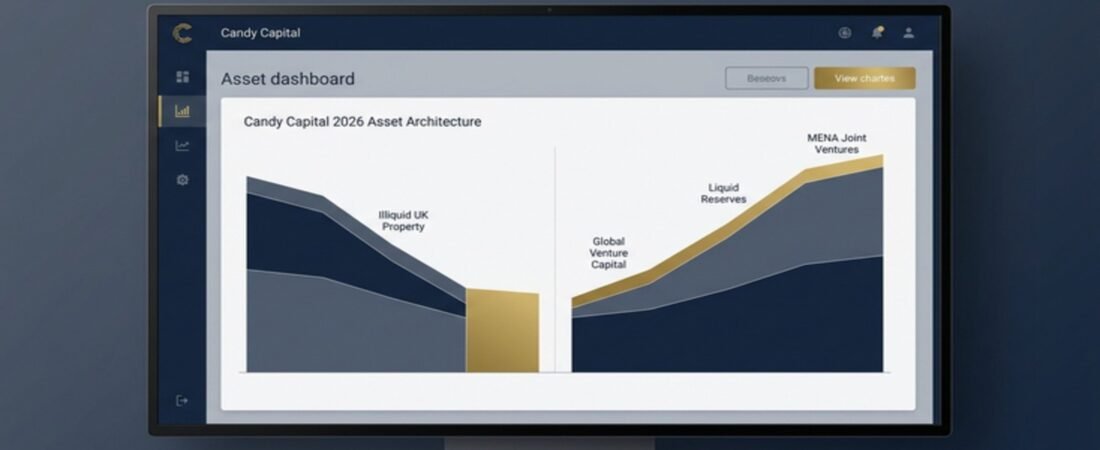

Nick Candy’s wealth architecture in 2026 represents a masterclass in the “Liquidity Pivot”—a strategic recalibration that distinguishes legacy property dynasties from modern multi-sector family offices. While his foundational reputation rests upon brick-and-mortar monuments like One Hyde Park, the 2026 forensic picture reveals something far more dynamic: a capital engine that has deliberately shed its most illiquid trophy asset, Providence House, in favor of liquid venture deployment, political infrastructure, and cross-border arbitrage.
The trajectory from a £6,000 grandmother-backed loan in 1995 to a portfolio commanding an estimated $1.1 billion to $2.0 billion in 2026 illustrates a deliberate deconstruction of the traditional developer model — though that range reflects genuine valuation opacity across illiquid family office holdings, post-divorce settlement uncertainty, and mark-to-market assumptions on venture positions rather than audited financial statements.
Following the 2018 restructuring that severed formal ties with his brother Christian, Nick Candy repositioned himself not as a property developer, but as the sole architect of Candy Capital—a family office deploying capital across real estate, technology, natural resources, and political influence. His December 2024 appointment as Treasurer of Reform UK completes the matrix: wealth converted into policy leverage, policy leverage protecting wealth against fiscal tightening. For institutional observers, the Candy portfolio is now a live case study in how UHNW individuals navigate post-2025 regulatory headwinds by strategically deploying liquidity.
Wealth Audit: The Nick Candy Portfolio
Strategic Posture: Liquidity Pivot from illiquid trophy assets to an agile, multi-sector family office infrastructure optimized for the post-2025 regulatory and fiscal climate.
The £270M Chelsea Exit: How the 2026 Providence House Sale Redefined London’s Ultra-Luxury Market
The 2026 sale of Providence House for a reported £265 million–£275 million (approximately $335 million–$345 million at current exchange rates) represents more than a record-breaking residential transaction—it is a structural inflection point for London’s super-prime market. The Grade II-listed Georgian mansion, situated within the grounds of the Royal Hospital Chelsea and spanning 8,093 square metres, commanded the largest known residential transaction in history, eclipsing the previous global record set by Ken Griffin’s $238 million New York penthouse purchase in 2019.
Forensically, the transaction reveals several critical portfolio mechanics. First, the asset was never formally listed; Suneil Setiya, co-founder of Quadrature Capital, approached Candy directly, conducting negotiations entirely off-market. This is significant: it demonstrates that at the apex of global wealth, price discovery occurs through private networks rather than public markets. Second, the ownership structure—held via Providence House LLP with Candy as sole beneficial owner—allowed for a clean, single-beneficiary liquidation without the complications of fractional ownership or cross-holding disputes that often plague UHNW divestitures.
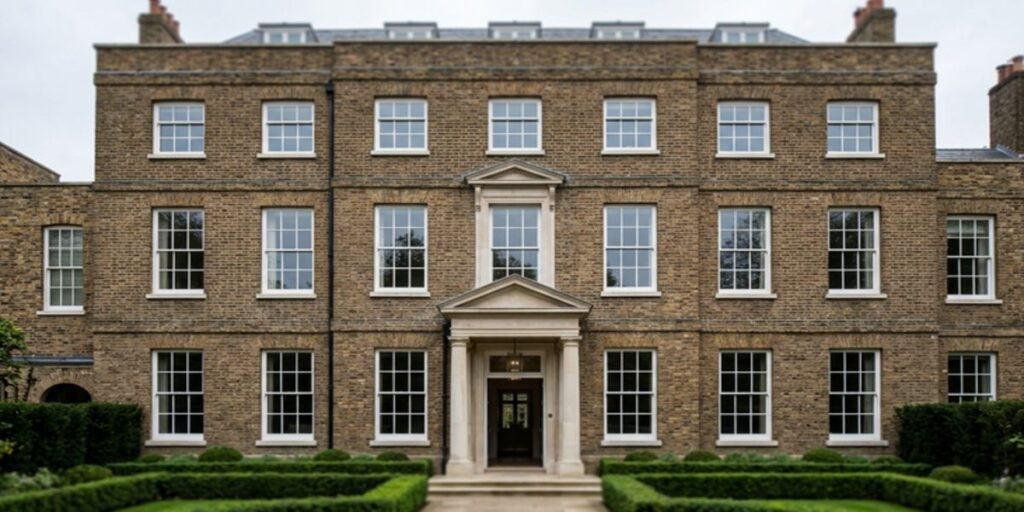
The buyer profile is equally instructive. Setiya’s Quadrature Capital is a quantitative trading firm that has committed $1.5 billion in grants through its Quadrature Climate Foundation and pays employees an average exceeding $3.5 million annually. This marks a decisive shift in London trophy asset ownership from traditional developers and old-money dynasties to modern quantitative finance titans. Where property developers once sold to bankers, and bankers to hedge fund managers, the 2026 market is being absorbed by algorithmic wealth. Setiya’s acquisition also carried a Stamp Duty Land Tax liability of approximately £31.7 million—a fiscal extraction that underscores the carrying cost burden of illiquid physical assets in high-tax jurisdictions.
For Candy, the liquidation injected massive liquidity into a portfolio that had been disproportionately weighted toward London real estate. The property, represented roughly a 3.6-fold appreciation over 12 years. However, the “Liquidity Premium” thesis suggests that holding a £270 million illiquid asset incurs substantial opportunity costs: maintenance, security, staffing, insurance, and the regulatory risk of potential mansion tax or capital gains adjustments in a shifting UK fiscal environment. By converting Providence House into liquid capital, Candy signals a defensive posture against macroeconomic headwinds while freeing capital for higher-velocity deployments through Candy Ventures SARL and Candy Capital.
From One Hyde Park to Candy Capital: Inside the Architecture of a Billionaire Fortune
To understand the 2026 portfolio, one must deconstruct the historical capital accumulation phase. The Candy narrative begins not with inherited wealth, but with a £122,000 one-bedroom flat in Earl’s Court, purchased in 1995 with a £6,000 loan from their grandmother. Nicholas Anthony Christopher Candy and his younger brother Christian renovated the property while maintaining day jobs—Nick at advertising agency J. Walter Thompson, Christian at Merrill Lynch—and sold it 18 months later for £172,000, netting a £50,000 profit that would seed an empire.
This bootstrapped origin story belies the sophisticated financial engineering that followed. The brothers established Candy & Candy in 1999, leveraging interior design expertise to differentiate their developments in an increasingly commoditized London market. The inflection point arrived in 2005 when, using financing from the Prime Minister of Qatar, they acquired a Knightsbridge site for £150 million and developed One Hyde Park—the über-luxury complex that redefined global super-prime pricing. When Ukrainian billionaire Rinat Akhmetov paid $213 million for a penthouse in 2011, followed by an additional $140 million in renovations, the Candy brand became synonymous with the apex of residential luxury.
The brothers expanded internationally with 9900 Wilshire in Beverly Hills ($250 million acquisition in 2007) and Chelsea Barracks (£959 million, backed by Qatar’s sovereign investment vehicle). However, the trajectory diverged in June 2018 when Candy & Candy was renamed Candy Property, formally positioning Nick as the sole owner of the operating business. This restructuring was not merely cosmetic; it represented a strategic necessity to align Nick’s property interests with his widening investment mandate through Candy Capital.
Post-2018, Nick Candy’s capital architecture bifurcated. Candy Property (now Candy London) retained the development and design management expertise, while Candy Capital emerged as the private family office deploying capital across real estate, technology, natural resources, and luxury brands. The distinction is critical: Christian Candy maintained independent operations focused on pure real estate, while Nick constructed a multi-sector hedging vehicle. This divergence explains why Nick’s 2026 portfolio includes Metals Exploration plc (where he commands a 21.91% voting stake consolidated through his Luxembourg vehicles), Candy Ventures SARL tech investments, and political infrastructure, while Christian remains anchored to physical asset development.
The residual One Hyde Park position remains a significant component of Nick’s real estate footprint. His duplex penthouse—18,000 square feet across two floors with five bedrooms, a private spa, wine room, and home theater—was listed for £175 million in 2021 and remains on the market as of 2026. Notably, Candy refinanced this asset in October 2018 with an £80 million mortgage facility from Credit Suisse—debt subsequently absorbed into the UBS legacy portfolio following the Swiss banking merger—demonstrating a sophisticated approach to leveraged capital preservation even within his trophy holdings.
Global Trophy Assets: Deconstructing “The Reserve” in Holmby Hills and the 11-11 Superyacht

Beyond London, Candy’s international luxury lifestyle holdings reveal a secondary tier of assets optimized for cross-border diversification and lifestyle backing rather than pure yield generation.
“The Reserve” — Holmby Hills, Los Angeles
The Holmby Hills compound, known as “The Reserve,” represents a fascinating case study in intra-family asset transfer and cross-border flipping. Originally acquired from Christian Candy for $28.5 million, the property was positioned on the market at $85 million in July 2022. However, the asset has experienced significant price compression in the post-pandemic luxury market. By July 2025, the asking price was reduced to $59.5 million, and as of March 2026, it relisted at $58 million—a 32% reduction from the original ask.
This trajectory illustrates the volatility inherent in ultra-luxury secondary markets. Unlike Providence House, which traded in a supply-constrained London enclave, the Los Angeles megamansion market has faced inventory saturation and buyer fatigue. The two-property compound spans approximately 1.88 acres and includes a theater, reflecting the “lifestyle asset” logic rather than pure investment rationale. For UHNW auditors, the key metric is not current market value but carrying cost as a percentage of total portfolio—assets like The Reserve function as private capital preservation vehicles and lifestyle backing, with liquidity events occurring opportunistically rather than strategically.
The 11-11 Superyacht
The 63-meter Benetti superyacht 11-11 (delivered in 2015) represents the sovereign lifestyle asset tier of the Candy portfolio. Custom-designed by Candy’s own firm, the vessel features Art Deco interiors with Italian marble, bespoke chandeliers, and blue-chip artwork including a Tracey Emin neon piece. Accommodating 14 guests across six cabins with a crew of 16, the yacht includes a sky lounge, spa, gym, and helipad.
Candy listed the vessel for €59.5 million ($71 million) in August 2020, stating he wished to “build a bigger yacht” and that “later in life, people contract their lives; at this age, I’m still expanding.” The vessel was subsequently sold in early 2023 to an unknown buyer and renamed “Soundwave”, registered under the company name Eleven Eleven London LLP. While the exact sale price remains undisclosed, the transaction demonstrates Candy’s willingness to rotate even deeply personalized lifestyle assets when market conditions favor liquidity.
The Candy Wealth Allocation & Liquidity Matrix (2026 Benchmarks)
The Liquidity Premium Shift: From Brick-and-Mortar to Agile Capital
Nick Candy represents the modern Liquidity Pivot—converting brick-and-mortar landmarks into an agile, multi-sector family office optimized for a post-2025 regulatory climate.—converting brick-and-mortar landmarks into an agile, multi-sector family office optimized for a post-2025 regulatory climate.
The Providence House liquidation must be understood through the lens of carrying cost economics. A £270 million trophy asset in London could plausibly incur annual costs of £5 million–£8 million when accounting for security, staffing, maintenance, insurance, and local taxation — a carrying cost burden that compounds the case for liquidation in an uncertain fiscal environment. In an environment of potential mansion tax discussions, non-dom regime changes, and capital gains adjustments, the “safety” of physical London real estate becomes a liability. By contrast, liquid capital deployed through Candy Ventures SARL into high-velocity tech plays or through Candy Capital into Dubai super-prime developments offers both geographic diversification and regulatory arbitrage.
This shift is already manifesting in Candy’s Middle Eastern expansion. In 2023, Candy Capital partnered with Dubai World Trade Centre for a super-prime development in One Central, with Killa Design (architects of the Museum of the Future) leading the project. In 2024, a joint venture with Abu Dhabi’s Modon Holding was announced, targeting “extraordinary real estate developments” across the UAE. At the 2025 Future Hospitality Summit in Dubai, Candy articulated his thesis: “Dubai today is a tier-one global city… If you believe Dubai is a tier-one city, it is the cheapest place on the planet for super-prime real estate.” This is liquidity in motion—capital fleeing potential UK fiscal tightening for zero-tax, high-growth jurisdictions.
The Tech Venture Hedge and Legal Vulnerabilities: Auditing Candy Ventures SARL
The performance of Candy Ventures SARL—Candy’s Luxembourg-registered investment vehicle—reveals the high-volatility counterweight to his predictable real estate yields. The portfolio lists 18 investments including Blippar (augmented reality), Ralph & Russo (fashion house), Hanzo Archives (data processing), and mining interests including the Runruno gold mine in the Philippines.
The venture strategy has been aggressive and occasionally catastrophic. Candy Ventures acquired stakes in Blippar and Crowdmix after both companies entered administration, facilitated by administrator Paul Appleton—who also handled the Ralph & Russo bankruptcy. These were distressed asset plays, betting on intellectual property salvage rather than operational continuity.
More significantly, the portfolio has generated substantial litigation exposure. In July 2022, Candy Ventures SARL sued Aaqua BV and its major shareholder Robert Bonnier for alleged fraud, claiming Bonnier misrepresented that Apple and LVMH were poised to invest €960 million in the social media platform. The High Court issued a freezing order against Bonnier, requiring Candy Ventures to post a £10 million bank guarantee. The freezing orders were discharged in August 2022, and Bonnier subsequently demanded £150 million in damages for reputational harm.
The November 2025 High Court judgment in Candy Ventures v Aaqua ultimately found that Bonnier had indeed made fraudulent misrepresentations regarding Apple and LVMH involvement, and that these representations induced Candy Ventures to enter into three agreements involving a €7.5 million investment and a share swap with Audioboom Group PLC. However, the litigation illustrates the binary risk profile of venture investing: high-alpha potential balanced against total loss and reputational contagion.
Candy’s tech exposure extended through ACME Capital, a Silicon Valley venture fund held through the Guernsey-registered Tenzing Albert Ltd. ACME’s portfolio included SpaceX, Uber, Airbnb, Robinhood, and OpenGov—companies whose founders and executives collectively poured millions into Donald Trump’s 2024 campaign. Candy exited this position in January 2024 when SpaceX was valued at $180 billion (subsequently reaching $350 billion), capturing significant upside while severing formal ties before his political appointment.
Holly Valance Divorce, The Marital Dissolution Variable: Valuation Overhang
One material uncertainty in the 2026 valuation is the financial impact of Candy’s separation from his wife Holly Valance, confirmed in June 2025 after ten years of marriage. While no settlement terms have been disclosed and both parties are understood to be subject to confidentiality arrangements, the division of jointly held assets — potentially including lifestyle holdings and cash reserves — introduces a downward variable on the lower bound of the net worth estimate. Unlike the Bannatyne-McCue dissolution, where asset transfer figures entered the public record through Bannatyne’s own statements, the Candy-Valance settlement remains entirely opaque. Institutional analysts should treat the $1.1 billion lower bound as reflecting this uncertainty rather than confirmed asset depletion.
The Political Capital Matrix: Wealth as Policy Infrastructure
Nick Candy’s December 2024 appointment as Treasurer of Reform UK represents the final vector of his capital deployment: the conversion of financial wealth into political infrastructure. This is not charitable giving or passive party membership; it is strategic positioning at the intersection of wealth preservation and public policy.
The appointment followed Candy’s defection from the Conservative Party, where he had donated over £270,000 and led fundraising for Shaun Bailey’s 2021 London mayoral campaign. As Reform UK Treasurer, he has donated £1 million personally and pledged to raise £25 million–£40 million for the party. He has brought “business discipline” to Reform’s finances, targeting fossil fuel donors “very disillusioned” with current UK government policies.

The strategic logic is transparent: UHNW individuals leverage public-policy influence to hedge against domestic fiscal tightening and capital gains changes. Reform UK’s manifesto promises to “unlock Britain’s vast energy treasure of oil and gas” and scrap net zero commitments—policies that would directly benefit Candy’s mining interests (Metals Exploration plc, Runruno gold mine) and align with his recent mining delegation to Nicaragua, where he reportedly met individuals whom subsequent reporting identified as subject to international sanctions
The political infrastructure also provides network access. Candy arranged a meeting between Nigel Farage and Elon Musk at Mar-a-Lago shortly after his appointment, seeking donations for Reform UK. This places him at the nexus of a trans-Atlantic high-net-worth political network where Silicon Valley wealth, UK political insurgency, and resource extraction interests converge.
Frequently Asked Questions about Nick Candy (The Forensic Desk)
What is Nick Candy’s exact net worth in 2026?
Estimates vary between $1.1 billion and $2.0 billion. The lower bound reflects post-divorce asset division (his split from Holly Valance was confirmed in June 2025) and venture write-downs; the upper bound assumes full valuation of Candy Capital’s illiquid portfolio and the Providence House liquidity event. Institutional analysts should note that family office valuations are inherently opaque, particularly when assets are held through Luxembourg and Guernsey vehicles.
Who bought Nick Candy’s London mansion?
Suneil Setiya, co-founder of Quadrature Capital, acquired Providence House in Chelsea for £265 million–£275 million in an off-market transaction completed in early 2026. Setiya is a significant Labour Party donor, creating the notable spectacle of a Reform UK treasurer selling his primary residence to a donor of the opposing party.
What investments does Candy Capital hold?
Candy Capital oversees a multi-sector portfolio including:
(1) Real Estate — Candy London developments, Dubai joint ventures with DWTC and Modon Holding, and residual One Hyde Park holdings;
(2) Technology — Candy Ventures SARL portfolio including Blippar, Ralph & Russo, Hanzo Archives, and former ACME Capital exposure;
(3) Natural Resources — 21.91% stake in Metals Exploration plc (AIM-listed, gold mining) split across his wholly-owned entities, alongside Runruno gold mine assets;
(4) Luxury Brands — Wild Idol (alcohol-free luxury beverage);
(5) Political Infrastructure — Treasurer role and donor network access through Reform UK.
Is Nick Candy still partners with his brother Christian?
No. The brothers formally separated their business interests in 2018 when Candy & Candy was renamed Candy Property, with Nick assuming sole ownership. Christian Candy continues independent operations focused on pure real estate development, including recent activity in Manhattan. While they collaborated on historic projects like One Hyde Park and 9900 Wilshire, their current portfolios operate entirely independently.
Elites Mindset Intelligence Unit — Financial Disclaimer
Editorial & Valuation Notice: The insights, analysis, and asset appraisals presented in this wealth audit are compiled for journalistic, educational, and macroeconomic research purposes only. Net worth valuations represent institutional consensus estimates based on verified property transfers, public filings, and corporate disclosures; they do not constitute audited financial statements or formal balance sheet verifications. Family office allocations, cross-border corporate shell entities (including Guernsey and Luxembourg SARL configurations), and marital estate settlements are inherently subject to private valuation opacity. Nothing contained within this report constitutes investment banking advice, fiscal counsel, regulatory directives, or an endorsement to buy or sell public securities (including Metals Exploration plc). Past execution performance is not indicative of future market returns.