

The 2017 union of Pippa Middleton and James Matthews was never merely a societal event. Viewed through an institutional lens, it represented one of the most significant dynastic mergers in modern British private wealth—a convergence of terrestrial aristocracy, institutional hedge fund liquidity, and global hospitality yield. On one side of the ledger stands the Matthews family, whose capital engine, Eden Rock Capital Management, has generated estimated personal fortunes exceeding £2 billion, anchored by trophy assets in the Caribbean and the Scottish Highlands. On the other side sits the Middleton commercial dynasty, whose proximity to the monarchy and whose operational expertise in direct-to-consumer retail created a form of “reputational capital” that cannot be replicated through traditional private equity structures. The family’s income comes from three distinct sources: the hedge fund, a Caribbean hotel, and a Scottish estate — none of which depend on the others’ performance.
This piece looks at what’s publicly known about the Matthews-Middleton family’s assets — including some ownership details that aren’t widely reported. Unlike conventional UHNW families who remain asset-rich but cash-poor, the Matthews family maintains a disciplined liquidity-asset balance. The hedge fund provides the firepower; the land and hotels provide the intergenerational insulation.
The Middletons provide the operational nous and the royal adjacency. The result is a multi-family office structure in all but name, where capital appreciation, tax-efficient trust planning, and reputational leverage operate as a single synergistic entity.
Wealth Audit: The Matthews-Middleton Portfolio
| Strategic Asset Class | Primary Holding | Operational Intelligence |
|---|---|---|
| Estimated Combined Net Worth | £2B+ | (unverified, based on a 2016 estimate) | Hedge fund stake + landed estates + hospitality yield |
| Primary Liquidity Engine | Eden Rock Capital Management | Multi-strategy hedge fund, City of London |
| Trophy Asset Yield | Eden Rock, St. Barths | Ultra-luxury hotel, operated with Oetker Collection |
| Intergenerational Land Bank | Glen Affric Estate | 10,000 acres, Scottish Highlands; future Lairdship |
The Eden Rock Foundation: How Hedge Fund Manager James Matthews Built the Fortune
James Matthews did not follow the typical City trajectory. A former British Formula Renault champion and Eurocup winner in 1994, he transitioned from the track to the trading floor, training as a securities trader at Spear, Leeds & Kellogg—now part of Goldman Sachs—before moving to Nordic Options Ltd in 1997. In 2001, he co-founded Eden Rock Capital Management, naming the firm after his father’s Caribbean hotel and establishing what would become the family’s primary liquidity engine.

Eden Rock Capital Management has offices in London, Bermuda, Connecticut, and Miami, and its stated mandate spans fixed income portfolio management, early-stage UK growth companies, and operational support for the broader Eden Rock Group. Reported assets-under-management figures — including a claim that it managed over £1 billion by 2007 — come from older press coverage rather than the firm’s own disclosures, which aren’t public, so they should be treated as unverified. A $2.6 billion (£2 billion) estimate for Matthews first appeared in a 2016 Evening Standard report and has been widely repeated since, but no independent, more recent source confirms it, and the family does not disclose financial details. Given his ownership of Eden Rock Capital Management and the family’s hospitality and land assets, his fortune is substantial, but £2 billion should be treated as an unverified, decade-old estimate rather than a confirmed 2026 figure.
Eden Rock Capital also appears to fund the family’s other acquisitions. Glen Affric, for instance, is held through Beaufort Entreprise SA, a company registered in the Seychelles, with James Matthews listed at Companies House as director of the associated Beaufort Glen Affric Ltd since 2007.
The Hospitality Anchor: St. Barths and the Global Luxury Real Estate Map
While James Matthews built the institutional fortune, the Matthews family’s hospitality DNA originates with his father, David Matthews. Born the son of a Yorkshire coal miner, David Matthews built his initial wealth through motor dealerships and luxury coach-making before retiring from traditional industry after the recession. In 1995, while on holiday in the French West Indies, he and his wife Jane purchased the faded Eden Rock hotel on St. Jean Bay, St. Barths—a property originally built by Dutch aviator Remy de Haenen in the 1950s and once frequented by Greta Garbo and Howard Hughes.
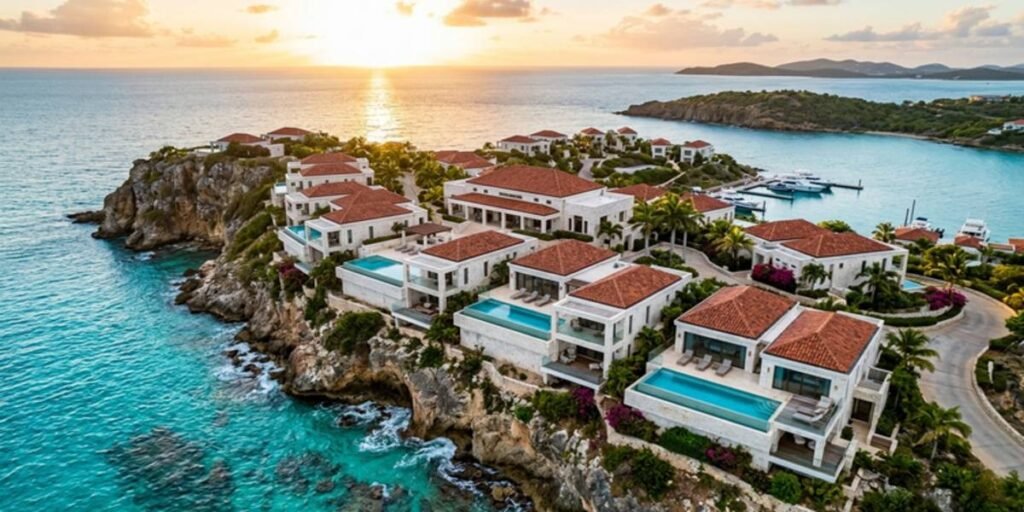
Under the Matthews stewardship, Eden Rock transitioned from a bohemian guesthouse to one of the world’s most profitable ultra-luxury boutique hotels. The property now comprises 37 rooms, lavish villas including the 16,000-square-foot Villa Rockstar (complete with John Lennon’s original recording console), and restaurants by Jean-Georges Vongerichten. In 2014, the family partnered with the Oetker Collection to manage the property, bringing institutional hospitality discipline to the Matthews’ creative vision while retaining ownership.
The hotel functions as more than a lifestyle asset; it is a high-yielding trophy property in a jurisdiction with favorable tax treatment, generating revenue streams that complement the hedge fund’s cyclical returns. The property sustained and was comprehensively refurbished after Hurricane Irma in 2017, with design direction from Jane Matthews through the Eden Rock Design Group. Nightly rates run into the thousands, with the dedicated Pippa Suite commanding premium pricing—a subtle but effective commercialization of the family’s royal adjacency.
The Oetker Management Mandate: A Lesson in Asset Optimization
A critical nuance in the Matthews wealth architecture is the distinction between asset ownership and operational management. While the Matthews family (via Eden Rock St Barths Ltd) maintains 100% equity in the physical real estate, the property has been managed by the Oetker Collection since 2014.
This partnership aligns the Matthews family with the same elite management tier as the Hotel du Cap-Eden-Roc in Antibes and Le Bristol in Paris. By offloading operational overhead to a global luxury powerhouse, the Matthews family secures:
- Institutional Scalability: Access to Oetker’s global UHNW guest database.
- Yield Protection: Professional management ensures top-tier RevPAR (Revenue Per Available Room) regardless of regional market shifts.
- Brand Halo: The association with Oetker elevates the property’s valuation multiple for future divestment or collateralization.
“By retaining ownership but outsourcing management to Oetker, the family keeps the property’s asset value while avoiding the cost of running a hotel day-to-day.”
The Glen Affric Estate: Landed Assets and the Future Title
If Eden Rock represents the Matthews family’s liquidity and yield, the Glen Affric Estate represents their intergenerational insurance policy. David Matthews reportedly bought the estate in 2007–2008 for around £7 million — consistent with James Matthews’ listed directorship of Beaufort Glen Affric Ltd since 2007, noted above. The 10,000-acre property near Loch Ness is anchored by Affric Lodge, a Victorian hunting lodge built between 1860 and 1872. The property includes a loch, Caledonian pinewoods, and some of the most ecologically significant terrain in the United Kingdom.
David Matthews holds the feudal designation of Laird of Glen Affric, and upon his death, James Matthews will inherit both the estate and the courtesy title, making Pippa Middleton Lady Glen Affric. This is not merely ceremonial. The estate is already commercially operational, with Affric Lodge available for exclusive hire at £11,800 for three nights (eight guests) or £17,800 for sixteen guests. The property has hosted shoots, weddings (including Spencer Matthews’ 2018 marriage to Vogue Williams), and commercial filming—notably David Beckham’s Haig Club whisky campaign.
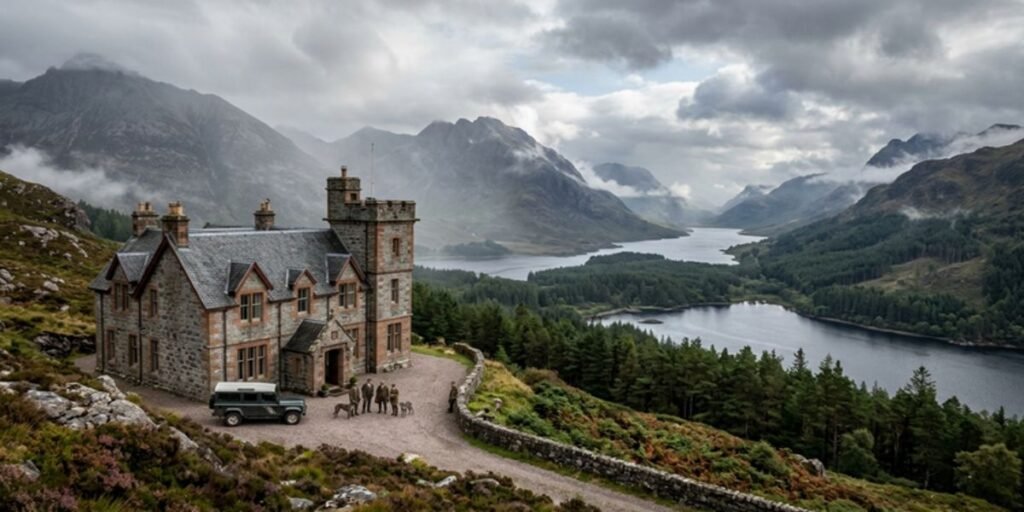
Critically, Glen Affric sits within the broader Affric Highlands rewilding landscape, a partnership covering over 81,000 hectares that includes Forestry and Land Scotland, Trees for Life, and 21 landowners. This positions the estate at the forefront of the UK’s natural capital economy. Through native woodland restoration, peatland recovery, and potential carbon credit generation, the Matthews family is converting feudal landholding into 21st-century environmental finance. The estate’s beaver reintroduction—extinct in Scotland for 400 years until their recent relocation to Loch Beinn a Mheadhoin—signals a strategic pivot toward biodiversity offsetting and sustainable tourism that will only appreciate in regulatory value as UK net-zero mandates tighten.
The Middleton Commercial Pivot: From Party Pieces to Private Equity
The Middleton family’s wealth trajectory offers a masterclass in commercial timing—and in the risks of failing to pivot. Carole and Michael Middleton founded Party Pieces in 1987; by the time of the 2011 Royal Wedding it had reportedly grown into a multi-million-pound business. However, the business failed to adapt to post-pandemic retail realities, entering administration in 2023 with £2.6 million in debts and ultimately selling for £180,000 to entrepreneur James Sinclair—though crucially, the buyer did not assume the company’s liabilities.
This collapse underscores why the Matthews-Middleton alliance favors private equity and land over consumer brands. Pippa Middleton herself has executed a deliberate pivot away from commercial brand dependence. Her 2012 lifestyle book, Celebrate, and earlier column work provided independent revenue, but her more significant value now lies in her integration into the Matthews investment architecture. The couple’s 2020 acquisition of Bucklebury Farm, reportedly for around £1.5 million, transformed a 72-acre deer park into a family tourism destination with glamping pods, farm shops, and nursery facilities—demonstrates a shift toward experiential assets with lower regulatory exposure and higher land-banking upside.
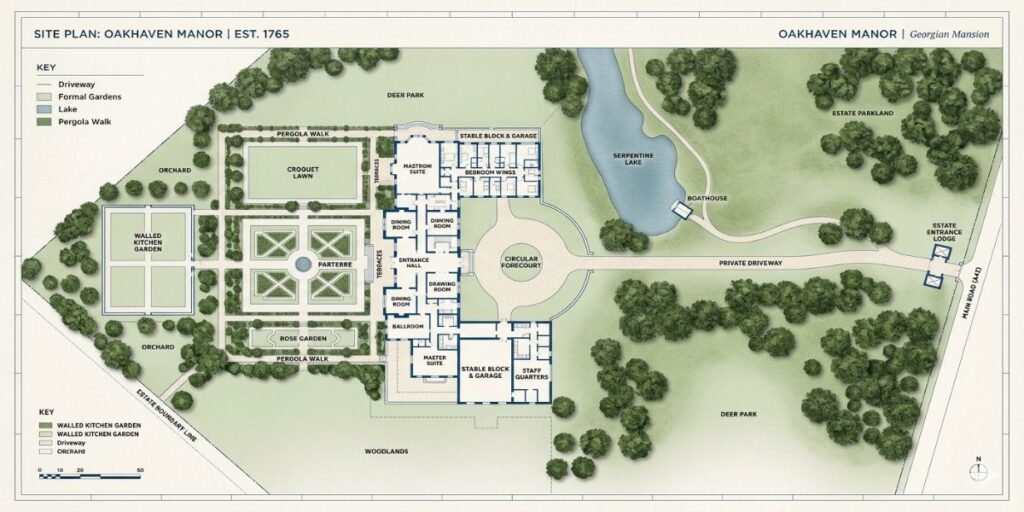
Meanwhile, the Middleton family retains significant Berkshire real estate. Carole and Michael reportedly reside at Bucklebury Manor, a Grade II listed Georgian estate said to have been purchased in 2012 for around £4.7 million. Pippa and James reportedly occupy a Georgian mansion on around 150 acres in the same county, purchased in 2021 for an estimated £15 million. This concentration of Middleton-Matthews capital in Berkshire has created a localized property premium, where royal adjacency functions as a reputational asset that drives valuations and attracts UHNW neighbors seeking the same networked privacy.
The Synergy Premium: Liquidity-Asset Balance
The hedge fund provides cash the family can use without selling land or hotel assets — a structure that avoids the problem many landed families face of being asset-rich but cash-poor. Many landed families find themselves trapped in illiquid heritage properties, forced to sell acreage or open houses to public trust schemes to cover maintenance and inheritance tax liabilities. The Matthews family avoids this trap through the Eden Rock Capital hedge fund, which provides high liquidity to fund estate improvements, acquire adjacent land, and service trust structures without divesting core holdings.
This balance is deliberately uncorrelated. When hospitality yields soften in the Caribbean, City trading profits can cover capital improvements. When hedge fund performance faces headwinds, the St. Barths and Glen Affric assets provide non-monetary collateral and lifestyle value that reduces discretionary burn rates. It is a form of private wealth arbitrage that few UHNW families execute with such precision.
The Berkshire-to-Billionaire Pipeline
The “Middleton Effect” on Berkshire property markets operates as a form of reputational alpha. The family’s concentration in the West Berkshire countryside—Bucklebury Manor, the £15 million Matthews-Middleton estate, and the Bucklebury Farm venture—has transformed the region from commuter belt into a secured node of royal-adjacent wealth. Local Berkshire property values have reportedly risen significantly in recent years; some of this is attributed locally to the area’s association with the Middleton family.
This reputational asset is hard to quantify but essential for UHNW networking. The Middletons do not merely own property in Berkshire; they anchor a social ecosystem where private capital, royal proximity, and rural privacy converge. For the Matthews family, this provides a UK terrestrial base that complements their offshore hospitality and City financial operations.
The Stealth Wealth Logic
The Matthews-Middleton portfolio exemplifies why modern dynastic families eschew public-facing commercial brands in favor of private equity structures. Party Pieces failed in part because consumer retail demands public transparency, regulatory compliance, and brand vulnerability to sentiment shifts. By contrast, Eden Rock Capital Management (Company number OC309830) operates as a private investment vehicle with minimal disclosure requirements. The St. Barths hotel is owned through offshore-friendly structures. Glen Affric is held as a personal estate with agricultural and sporting tax advantages.
This architecture maximizes tax-efficient growth through trust structures, reduces regulatory scrutiny, and shields the family from the volatility of public markets. It is stealth wealth by design: liquid enough to act, opaque enough to avoid attention, and diversified enough to survive generational transfer.
A note on sourcing: Eden Rock Capital Management does not publicly disclose its assets under management or James Matthews’ personal financial stake, and several family holdings — including Glen Affric — are structured through private or offshore entities. The figures and estimates in this piece are drawn from public reporting, Companies House filings, and property records where available, not from the family’s own disclosures, and should be read as estimates rather than confirmed figures.
The Matthews-Middleton Asset Distribution Matrix (2026)
| Sector | Primary Asset | Strategic Role | Operational Status |
|---|---|---|---|
| Institutional Finance | Eden Rock Capital Management | Primary Liquidity Engine; multi-strategy hedge fund | PRIVATE |
| Hospitality Portfolio | Eden Rock, St. Barths | Trophy Yield Asset; Managed via Oetker Collection | ACTIVE YIELD / THIRD-PARTY MANAGED |
| Landed Estates | Glen Affric / Barton Court | Intergenerational Land Bank & Natural Capital (Carbon) | ACTIVE HOLDING |
| Commercial Brand | Middleton IP & Family Ventures | Reputational Capital; Royal adjacency pivot | RESTRUCTURED |
| Experiential Assets | Bucklebury Farm Park | Regional Tourism Yield & ESG Family Platform | VERIFIED OPERATIONAL |
Matthews-Middleton Private Wealth: FAQ
How much is James Matthews worth?
A widely cited estimate puts James Matthews’ net worth at over £2 billion (about $2.6 billion), but this figure traces back to a single 2016 Evening Standard report and hasn’t been independently reconfirmed since. Eden Rock Capital Management, which he founded in 2001, doesn’t publicly disclose its assets under management or Matthews’ personal stake, so a more current figure can’t be verified.
Will Pippa Middleton have a title?
Yes. When James Matthews inherits the hereditary title of Laird of Glen Affric from his father David, Pippa will become Lady Glen Affric. This title is a recognized feudal dignity within the Scottish nobility. Until that succession, James may use the style “James Matthews of Glen Affric the Younger.”
Who owns the Eden Rock St. Barths?
The hotel is owned by David and Jane Matthews (James Matthews’ parents). While the family retains ownership and strategic oversight, operations have been managed by the Oetker Collection since 2014, aligning the property with the world’s most elite hospitality standards.
What is the ‘Barton Court’ estate?
Barton Court is a Georgian mansion in Berkshire that James and Pippa reportedly purchased in 2021 for around £15 million, on an estate of approximately 145 acres. It serves as the couple’s primary UK residence.
The 2023 collapse of the Middleton’s Party Pieces company underscored a shift toward private equity and experiential assets. While the business debt was significant, the Matthews-Middleton portfolio is largely insulated due to its uncorrelated liquidity engines (hedge funds) and landed equity, which do not depend on consumer retail performance.
ⓘ
Institutional Disclosure:
This dynastic audit is based on Companies House filings, HM Land Registry records, and verified hospitality industry benchmarks. It does not constitute financial advice but serves as a forensic analysis of private equity architecture and multi-generational wealth for the Elites Mindset Intelligence Unit.