

While 2024 was defined by simple Chatbots, the 2026 landscape is defined by autonomous AI agents that handle tasks previously reserved for a chief investment officer The contemporary wealth management infrastructure is no longer merely a recommendation engine wrapped in a conversational interface; it has evolved into an architecture that can autonomously run portfolio audits across jurisdictions, identifying latent tax drag, and rebalancing across fragmented custody environments with sub-minute latency. For the Ultra-High-Net-Worth (UHNW) principal and the family office CIO, the priority has shifted from chasing returns to finding and fixing the hidden drags on portfolio performance — whether from over-leveraging, currency risk misallocation, or inefficient tax-lot management.
The 2026 standard is agentic. In practice, this means autonomous systems operating within institutionally defined guardrails, typically encoded in an Investment Policy Statement (IPS), to monitor, decide, and execute workflows ranging from daily tax-loss harvesting to cross-border compliance verification without constant human supervision. According to a May 2025 Wolters Kluwer survey of 392 finance leaders, 6% were already using agentic AI and 38% planned to adopt it within twelve months — meaning up to 44% could be using it by 2026, a projected sixfold increase. Early implementations are also reported to show meaningful productivity and turnaround-time gains, though the specific ranges cited by different industry studies vary and should be checked against a named source before being repeated as precise figures. The following audit deconstructs the four core archetypes of this stack, evaluating their practical utility for capital preservation and alpha generation.
2026 Wealth Tech Audit: Core Performance Metrics
| Tool Archetype | Primary Forensic Function | 2026 “Alpha” Potential | Status |
|---|---|---|---|
| Predictive Tax Engines | Real-time harvesting & gift-tax shielding | High (Automated Compliance) | Verified |
| Sentiment Aggregators | Parsing 10-K filings & earnings calls | Moderate (Information Edge) | Verified |
| Risk Parity Agents | Cross-asset class volatility balancing | High (Capital Preservation) | Verified |
| Legacy Protection AI | Monitoring IP & digital estate leakage | Emerging (Asset Security) | Beta 2026 |
Source: Elites Mindset editorial team – 2026 assessment
The Algorithmic Guardrail: Auditing AI-Driven Tax-Loss Harvesting and Yield Optimization
Tax drag remains one of the most persistent yet addressable leaks in portfolio efficiency. In 2026, leading robo-advisory platforms report that sophisticated automated tax-loss harvesting can add up to 0.77%–1.0% in annual tax alpha, depending on portfolio volatility and the client’s marginal rate — though these figures come from vendor-published studies and vary significantly by methodology. This is not marginal; at institutional scale, it represents the boundary between benchmark-tracking and genuine outperformance. Modern AI tax-loss harvesting 2026 platforms have moved beyond simple daily-batch scanning to configurable real-time surveillance—operating on 15-minute to hourly intervals—that capturing substantially more harvesting events than legacy daily-batch processors, according to vendor performance reports (specific percentages vary by platform and market conditions).

These systems work across three layers. First, predictive models forecast short-term volatility spikes and trigger harvesting before the losses disappear. Second, wash-sale compliance has evolved from single-account surveillance to multi-account, multi-household perimeter monitoring. A significant proportion of wash-sale violations originate from held-away accounts — typically IRAs, 401(k) plans, and spousal accounts — that traditional single-custodian systems cannot observe. The IRS wash-sale rule applies across all accounts held by the same taxpayer and their spouse, making multi-account surveillance essential. Leading wealth audit software now aggregates position data across external record-keepers to construct a unified compliance perimeter, blocking substantially identical security purchases across the entire household ecosystem.
Third, and most important for regulatory compliance, is the reasoning trace — the audit trail behind every automated decision. Regulatory scrutiny from the SEC and state fiduciary bodies now demands that every automated transaction be accompanied by an auditable rationale: the specific loss threshold triggered, the replacement security selection logic, the wash-sale verification status, and the client suitability determination. Platforms that generate SEC-examination-ready documentation — including IRS Form 8949-ready export files — are becoming the baseline for automated rebalancing. Agentic systems also harvest small intraday dips that human advisers would miss, adjusting for state tax rates in high-tax jurisdictions like California, New York, and New Jersey.
Predictive Alpha: Evaluating Generative Intelligence in Market Sentiment Analysis
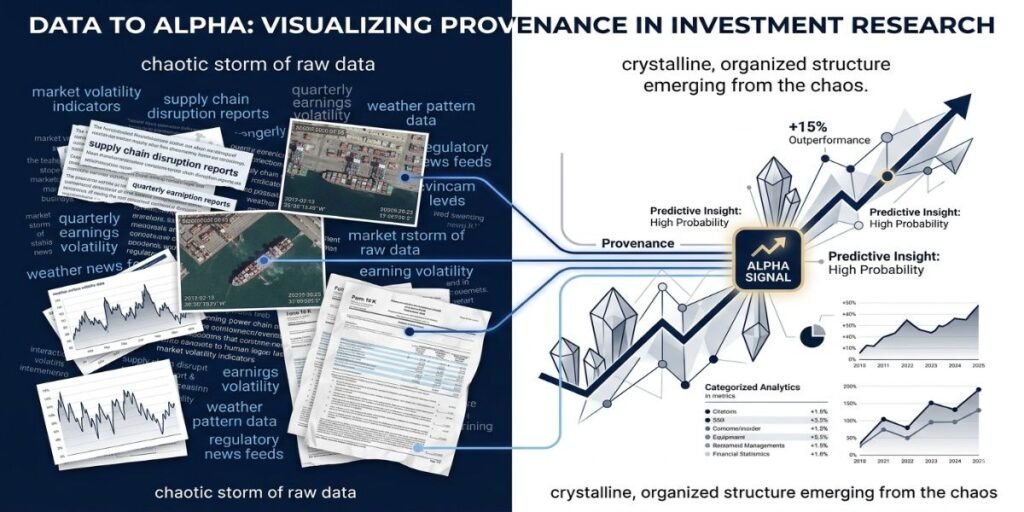
Price, volume, and fundamental data are now available to everyone. The remaining edge comes from extracting signals from non-traditional sources before the rest of the market catches up. In 2026, institutional AI trading platforms have integrated Large Language Models (LLMs) directly into research terminals, evolving from passive query-response interfaces to active intelligence agents that parse satellite imagery, maritime shipping logs, regulatory filings, and earnings call vocal stress patterns to identify predictive alpha.
The competitive landscape has fragmented into specialized layers. At the enterprise terminal level, Bloomberg’s 2026 iteration centres on ASKB — a conversational AI interface launched in beta in February 2026 that combines Bloomberg’s own smaller language models with third-party frontier models (including Anthropic). ASKB lets users query Bloomberg’s four decades of financial data in plain English rather than memorising function codes, while keeping all processing within Bloomberg’s proprietary infrastructure. BloombergGPT, the 50-billion-parameter model Bloomberg published research on in 2023, was never deployed in a production product.
AlphaSense has established dominance in qualitative intelligence, with sentiment analysis capabilities refined to detect micro-emotional variations—such as CEO hesitation or evasive language patterns—in earnings call transcripts and expert network conversations. For the independent analyst or boutique family office, Perplexity Finance has emerged as a viable alternative to traditional terminal infrastructure — more than 75% of Perplexity’s paying subscribers use its Finance section, according to the company. The platform provides synthesised answers with traceable citations to SEC filings and earnings transcripts, drawing on data partnerships with FactSet, S&P Global, Morningstar, and LSEG. Perplexity reached a $21.21 billion valuation following its Series E-6 funding round, with annual recurring revenue growing from $80 million in late 2024 to an estimated $200 million by February 2026.
Institutional Benchmarking: 2026 Terminal Philosophies
| Platform | Core Forensic Edge | 2026 Market Positioning |
|---|---|---|
| Bloomberg Terminal (ASKB) | Conversational AI interface (beta February 2026) layered on Bloomberg’s 30,000+ functions; uses a mix of proprietary small models and third-party LLMs; ~325,000 Terminal subscribers globally at ~$31,980/seat/year. | High-volume institutional execution & multi-asset terminal dominance. |
| AlphaSense | Advanced vocal stress patterns & micro-emotional detection in earnings transcripts. | Deep-dive fundamental research & qualitative signal extraction. |
| Perplexity Finance | Traceable, real-time citation engine mapping signals back to raw SEC filings. | Boutique family office agility & ad-hoc forensic cross-referencing. |
Source: Elites Mindset editorial team – 2026 assessment
The real value of these generative AI wealth management tools is not merely speed of synthesis, but provenance. In an environment where hallucination risk and model drift threaten capital allocation decisions, the expectation in 2026 is that every signal — bullish or bearish — comes with a traceable source Emerging platforms now deploy “honesty signal detection”—algorithmic contradiction flagging that identifies when corporate narrative diverges from underlying quantitative data. This turns sentiment analysis from a rough directional signal into a tool for catching management dishonesty before it shows up in the share price.
The Security Audit: Protecting Multi-Jurisdictional Assets with Zero-Trust AI
As family office cybersecurity 2026 frameworks confront an expanding threat surface—encompassing deepfake voice synthesis, synthetic identity fraud, and AI-generated phishing campaigns—the approach has shifted from reactive firewalls to zero-trust systems that continuously verify every access request. AI-powered identity management now monitors access patterns in real time, flagging suspicious behaviour and automatically restricting privileges before data can be exfiltrated.

For the multi-jurisdictional family office, the security audit extends beyond liquid portfolios to digital estate integrity. The Revised Uniform Fiduciary Access to Digital Assets Act (RUFADAA) has been enacted in all but a handful of US states (the Uniform Law Commission counts adoption in 44 states as of 2026, with several more having introduced legislation), granting executors and fiduciaries specific rights to access digital assets, yet the technical complexity of cryptocurrency custody, NFT provenance, and tokenized investment accounts continues to outpace legal frameworks.
Secure wealth management tech in 2026 now incorporates biometric-protected hardware wallets, multi-signature authorization schemes, and zero-knowledge encrypted digital vaults that trigger automated document delivery to designated heirs upon verified incapacity or death events. Furthermore, estate planning instruments must now account for AI-generated content royalties, automated trading algorithms, and smart-device ecosystems, requiring the explicit appointment of a digital executor with technical competency.
Blockchain integration adds an immutable record of every transaction, access event, and policy change — useful for satisfying cross-border regulatory examination. Combining AI monitoring with distributed ledger technology means verification happens continuously, not just after the fact — essential when autonomous agents operate across custody environments subject to EU MiCA, SEC, and state-level digital asset regulations.
The 2026 Information Gain Framework: Agentic Shift, Forensic Verification, and the Hybrid Model
The Agentic Shift: The defining structural transition of 2026 is the migration from predictive systems—those that forecast probable outcomes and await human execution—to agentic systems that autonomously operate within predefined constraints. One emerging concept is the “Self-Driving Portfolio” architecture — a multi-agent system in which specialised agents produce capital market assumptions, construct portfolios using competing methodologies, critique and vote on each other’s outputs, and execute a meta-agent feedback loop that adjusts behaviour and rewrites agent code and prompts based on realized return attribution. Crucially, the entire pipeline is governed by the Investment Policy Statement—the same legal document that constrains human portfolio managers—ensuring the system operates within the same legal boundaries as a human portfolio manager.

Forensic Verification via Explainable AI (XAI). No institution can use a tool that cannot explain why it made each decision. Explainable AI (XAI) frameworks now generate feature-importance scoring, confidence levels, model decision pathways, and post-hoc rationale for every autonomous action. Under the EU AI Act and parallel SEC guidance, high-risk financial AI systems must demonstrate audit capability, documented reasoning, and traceable logging—a requirement that renders opaque black-box models non-compliant for fiduciary deployment.
The EU AI Act entered into force in August 2024, with high-risk AI system requirements (including financial services applications) scheduled for full enforcement from August 2026. Institutions deploying autonomous trading or portfolio management agents in EU jurisdictions must ensure compliance by that date.
The Hybrid Model. The highest alpha is not achieved by replacing human judgment but by reallocating it. Agentic AI handles the analytical heavy lifting—data parsing, correlation detection, compliance monitoring, and micro-execution—while the human advisor retains authority over strategic intent, legacy architecture, and philanthropic structuring. Large asset managers have begun experimenting with multi-agent architectures that decompose stock screening into specialised agents (fundamentals, sentiment, valuation) which debate and cross-check before reaching a final decision, with human oversight concentrated at portfolio construction and risk budgeting. The result is that the adviser’s role changes — from manually executing investment tasks to designing and overseeing the system that does.
Frequently Asked Questions about AI Tools for wealth Management 2026
Can AI replace a traditional wealth manager in 2026?
No. The 2026 institutional standard is reconfiguration, not replacement — see ‘The Agentic Shift’ section above for the full mechanics. In practice, this means the investor’s role shifts from analytical execution to oversight, with the human advisor remaining indispensable for strategic intent: defining the Investment Policy Statement (IPS), setting escalation triggers for autonomous agents, and managing intergenerational wealth transfer dynamics that lie outside quantitative optimization.
What are the best forensic AI tools for high-net-worth estate audits?
The estate audit technology stack requires four integrated components:
- Predictive Tax Engines: Capable of cross-account wash-sale surveillance and state-tax optimization.
- Legacy Protection AI: Providing zero-knowledge encrypted vaults with biometric access controls.
- XAI-Compliant Platforms: Generating SEC-examination-ready audit trails with feature-importance scoring.
- Blockchain-Integrated Ledgers: Ensuring immutable record-keeping for digital asset custody.
Platforms such as Koyfin — a financial data and analytics terminal used by independent analysts, RIAs, and smaller family offices as a lower-cost alternative to Bloomberg — provide accessible entry points, while institutional deployments favour bespoke agentic architectures.
How does AI detect portfolio risk during high-volatility events?
During high-volatility regimes, AI risk detection operates through three mechanisms: Regime-classification agents analyze macro indicators to tilt construction methods; Risk parity agents continuously rebalance exposure to maintain volatility targeting; and Adversarial diversifier agents surface hedging ideas orthogonal to consensus allocations. The forensic layer ensures every adjustment is documented with a reasoning trace for regulatory reporting.
Institutional Audit: Is your existing technology stack leaking alpha? Contact the Elites Mindset editorial team for an architectural review.
Institutional Disclosure & AI Disclaimer
Financial Advice: The content provided by Elites Mindset is for informational and educational purposes only. It does not constitute financial, investment, legal, or tax advice. The “Forensic Audit” methodologies described are architectural frameworks and should not be interpreted as specific recommendations to buy or sell any security or adopt a specific investment strategy. Ultra-high-net-worth (UHNW) structuring involves significant risk; always consult with a qualified fiduciary or legal professional before implementing autonomous trading or estate systems.
AI Ethics & Accuracy: This report was developed using a hybrid model of human expertise and advanced Generative AI. While every effort has been made to ensure accuracy as of May 2026, the rapidly evolving nature of “Agentic AI” means that software capabilities, regulatory requirements (including SEC and EU AI Act guidance), and market conditions are subject to change without notice. Elites Mindset does not guarantee the performance of any third-party AI tools mentioned herein.