
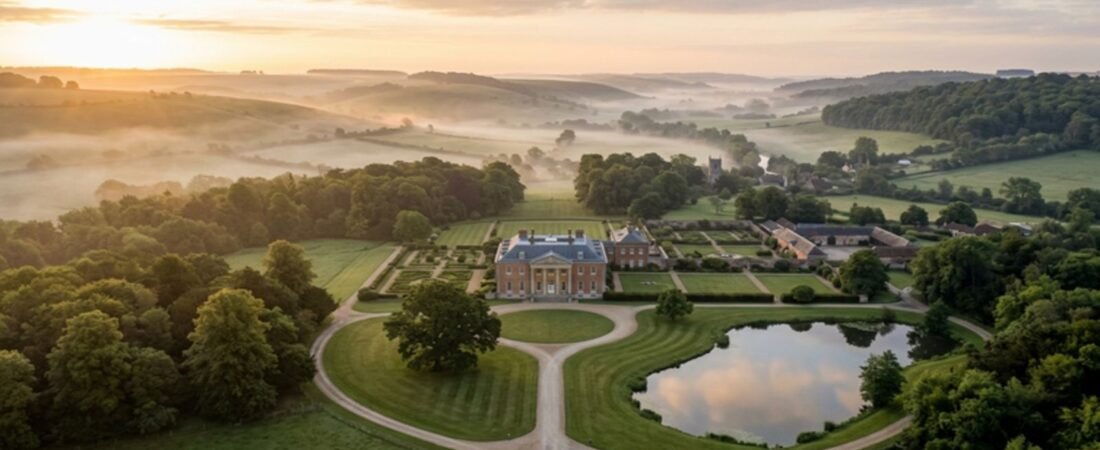
When the 2008 divorce settlement between Madonna and Guy Ritchie was finalized, the narrative focused on the $76–$92 million settlement — a figure that included Ashcombe House and the Punchbowl pub, not just a cash payment—one of the largest in British celebrity divorce history. But the less-reported part of the settlement was Ashcombe House itself, which Ritchie kept, the 1,100-acre Wiltshire estate the couple had acquired in 2001 for approximately £9 million. While Madonna divested herself of British property interests to relocate to New York, Ritchie kept the estate. He has since added a brewery — now closed — a game shoot, and a hospitality partnership that has run since 2024.
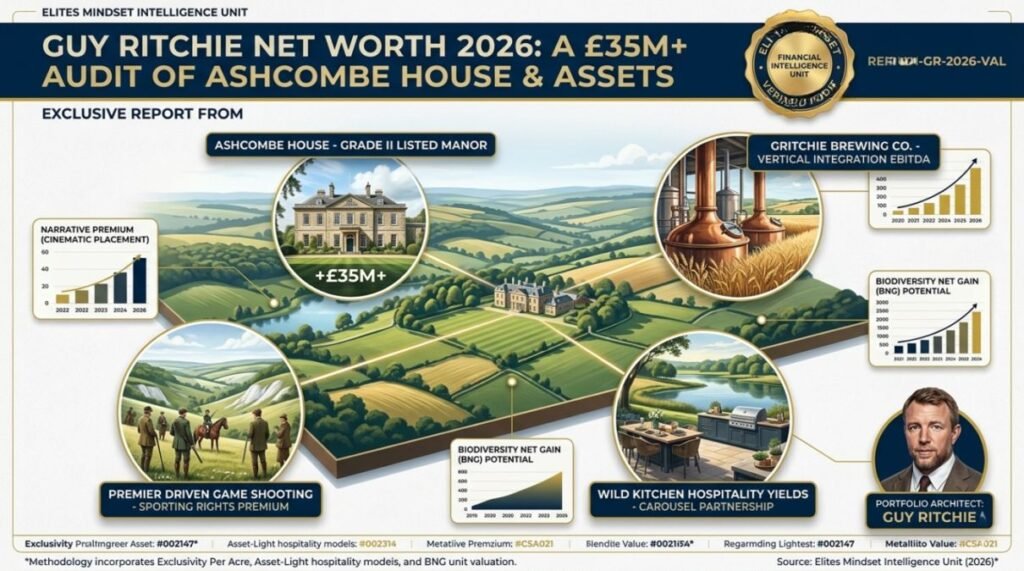
What was once a shared purchase is now Ritchie’s sole property, with several commercial activities added since 2008. The estate includes the Grade II listed manor house, driven game shooting, and — since 2024 — a hospitality partnership with Carousel London. The Gritchie Brewing Company, which operated from 2017, ceased production in October 2024. The 2026 season marks the third year of the Carousel collaboration, running May to September.
Note: The Gritchie Brewing Company, which formed part of the estate’s commercial activity from 2017, ceased brewing in October 2024.
| Claim | Source | What It Establishes | What It Does Not Establish |
|---|---|---|---|
| Acquired 2001, £9M | DiCamillo Companion; press reports | Purchase price | Current market value |
| 1,134 acres, Grade II listed | Wikipedia; Historic England | Size and heritage status | Revenue or running costs |
| Settlement ~£50–60M total including property | AP/press reports, 2008 | Combined settlement value | Separate valuation for the estate alone |
| Estate ~£18M value at divorce | Press report, 2008 | Approximate 2008 market estimate | Whether based on formal appraisal |
| Gritchie Brewing, 2017–2024 | CAMRA; Brewery History Society | Brewery existed, closed Oct 2024 | Revenue or profit during its operation |
| Carousel partnership, 2024–present | Carousel/Ashcombe official site | Hospitality programme exists; pricing published | Total seasonal revenue generated |
| £35M–£40M valuation | Author’s estimate | Comparable asking-price range | No surveyor or agent report exists |
The 2008 Settlement: How Ritchie Kept Ashcombe
The divorce settlement gave Ritchie the estate and the Punchbowl pub. According to the settlement details, the $76–$92 million figure included the value of Ashcombe House, which Ritchie retained outright, along with The Punchbowl pub in Mayfair, which Ritchie later sold in 2013. At the time of the 2008 divorce, one press report placed the estate’s approximate value at £18 million — up from the £9 million paid in 2001. While the press focused on the cash component, the longer-term value was in the estate itself.
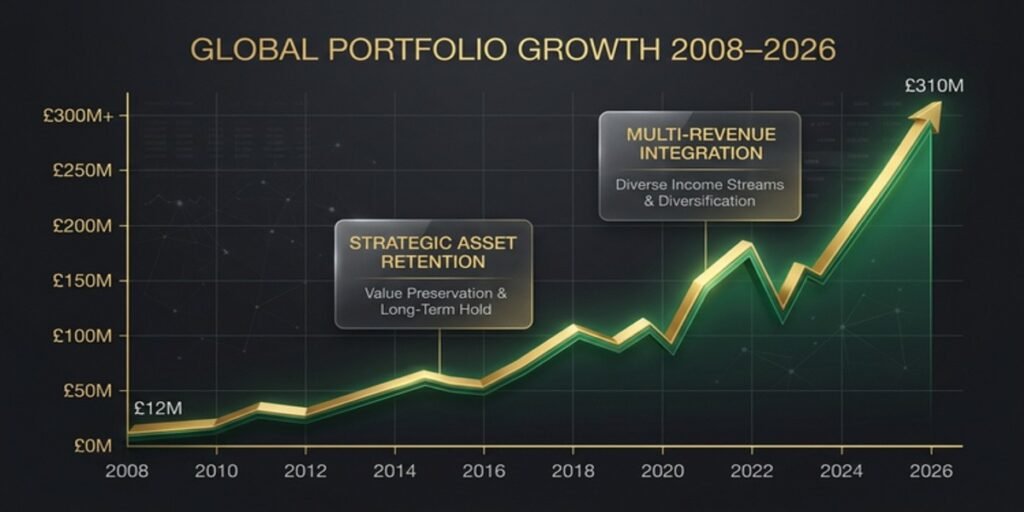
The 2008 settlement records don’t break out a separate value for Ashcombe apart from the pub — the combined settlement figure was $76–92 million (£50–60 million) for both assets together. Ritchie kept the property rather than selling it. The estate’s estimated value has risen substantially since 2001, though no independent agent’s valuation has been published.
The estate’s value has not been publicly established by an independent agent or surveyor. This article estimates a range of £35 million to £40 million based on comparable sporting-estate sales and the estate’s documented commercial activity — but no external valuation exists to confirm this.
The Estate: What It Includes and What It Is Worth
Ashcombe House itself is a Grade II listed Georgian manor, originally built in 1686 by Robert Barber, entirely demolished and rebuilt in 1740, substantially reduced in the 1870s, and renovated by Cecil Beaton during his lease from 1930 to the mid-1940s. The L-shaped structure, featuring English bond brick construction and a Palladian front door surround designed by Rex Whistler, is architecturally significant.
Game Shooting
The Ashcombe Estate operates one of the UK’s premier driven game shoots. The Field magazine has consistently ranked Ashcombe among the country’s top ten pheasant shooting venues. The estate’s unspoilt chalk valleys with steep contours present high, testing partridges and pheasants across 1,100 acres of chalk downland. Sporting estates with driven shooting typically sell at a premium over standard farmland, based on the quality of the shoot and bag size. Days at Ashcombe are available exclusively through the Darbishire Agency, with limited bag sizes ensuring sustainable management and premium pricing.
Gritchie Brewing Company (2017–2024)
The Gritchie Brewing Company operated from 2017 until October 2024, when it ceased production. Located within Ashgrove Farm on the estate, the brewery used homegrown Maris Otter malt barley from the estate’s fields and water drawn from its own borehole. The brewery, which started production in 2017 and expanded to a 40-barrel capacity in 2023, ceased operations in October 2024, producing pale ales, lagers, IPAs and stouts, distributed locally and through the Lore of the Land pub in Fitzrovia.
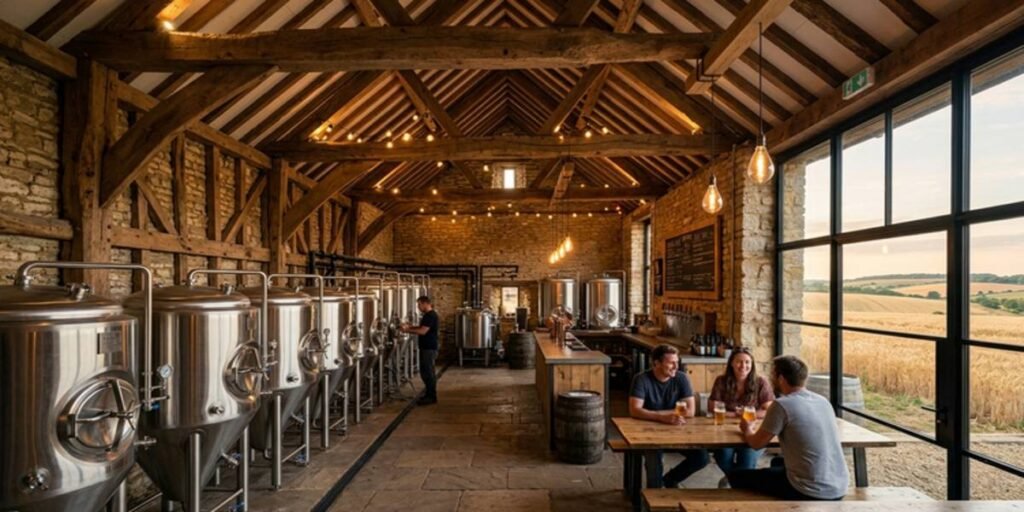
While it was operating, the brewery grew its own barley and used the estate’s borehole water, which reduced input costs compared with a standalone craft brewery. It also gave the estate a commercial reason to keep its farmland in active use. Whether the farmland has a different commercial use following the brewery’s closure has not been publicly stated. Following the brewery’s closure, CAMRA removed the Gritchie beer listings from the Lore of the Land’s entry, though the pub itself continues to operate. The former brewery building is now used as a reception and drinks space for the Carousel hospitality weekends.
Carousel x Ashcombe (2024–present)
Since 2024, Ashcombe has operated as an exclusive weekend retreat in partnership with Carousel London. The estate opens to around 20 guests at a time — spread across ten rooms on the property across 22 weekends from May to September, featuring world-class guest chefs at the lakeside WildKitchen—a custom-built, canvas-sided outdoor kitchen beside the estate’s lake, designed for live-fire cooking that starred in Ritchie’s Netflix series The Gentlemen. Guest accommodations include six en-suite double bedrooms in the Edward Hurst-designed farmhouse and four Hayloft suites (expanded from two in early 2026), with farmhouse doubles from £375 per night (up from £350 in 2025) and Hayloft suites at £750 per night and WildKitchen dinners priced at £175 per person (up from £350 in 2025).
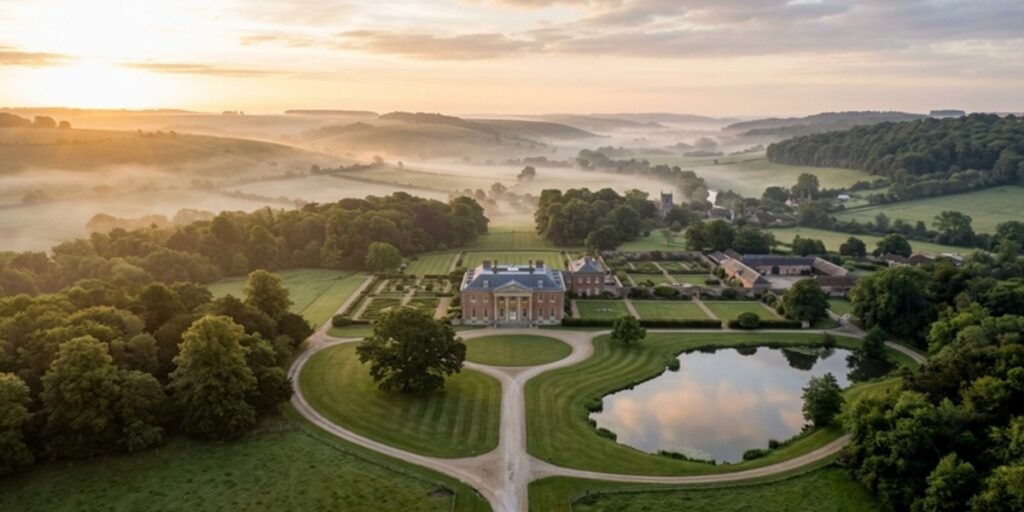
The limited guest numbers and high pricing allow the estate to generate revenue without operating as a conventional hotel. The WildKitchen concept has proven so successful that it has been replicated at luxury properties worldwide, including Beaverbrook in Surrey and The Lodge at Blue Sky in Utah.
Cecil Beaton’s Legacy and Its Effect on Value
While Cecil Beaton documented his fifteen-year lease at Ashcombe in his 1949 memoir Ashcombe: The Story of a Fifteen-Year Lease, Ritchie has made the estate’s cultural history part of its commercial identity. Beaton used Ashcombe as a gathering place in the 1930s and 1940s, hosting guests including Salvador Dalí. This documented history gives the estate a provenance that neighbouring land does not have.
Ritchie has built on this heritage in several ways:
The WildKitchen appeared in the Netflix series The Gentlemen (2024). Guests can recognise the copper-clad lakeside kitchen from the show. The exposure has raised the estate’s profile as a hospitality and filming venue.
The Times has described the partnership as one of the most exclusive supper clubs of the summer, and Condé Nast Traveller called it “The UK’s most delicious weekend away.” This reputation supports pricing at the higher end for countryside stays.
Brewery branding (2017–2024): The Gritchie Brewing Company’s beers drew on English folklore, with names like “English Lore,” “Sun Lore,” and “Moon Lore” and artwork by We Are Beard referencing folklore and religious iconography.
Properties with well-documented cultural history — like Ashcombe’s connection to Cecil Beaton and its use as a filming location — often command a premium over comparable estates without that provenance, though there’s no standardized industry figure for how large that premium typically is.
Valuation Considerations and Biodiversity Net Gain
How Sporting Estates Are Valued
Sporting estates are valued differently from residential property. Shooting rights, acreage, privacy and proximity to London all factor into asking prices, rather than price per square foot.
Current market comparables support the £35 million+ valuation. UK sporting estates currently listed with Savills range from £3.5 million for 395-acre Welsh properties to multi-million pound Wiltshire estates. Ashcombe’s documented cultural history, active hospitality partnership and game shoot may place it at the higher end of the range for comparable Wiltshire estates.
The Biodiversity Net Gain (BNG) Opportunity
A potential future revenue source for the estate is Biodiversity Net Gain (BNG). Under the Environment Act 2021, developers in England must deliver a 10% biodiversity net gain on all major developments, creating a mandatory market for biodiversity units. BNG for Nationally Significant Infrastructure Projects is scheduled to become mandatory later in 2026.
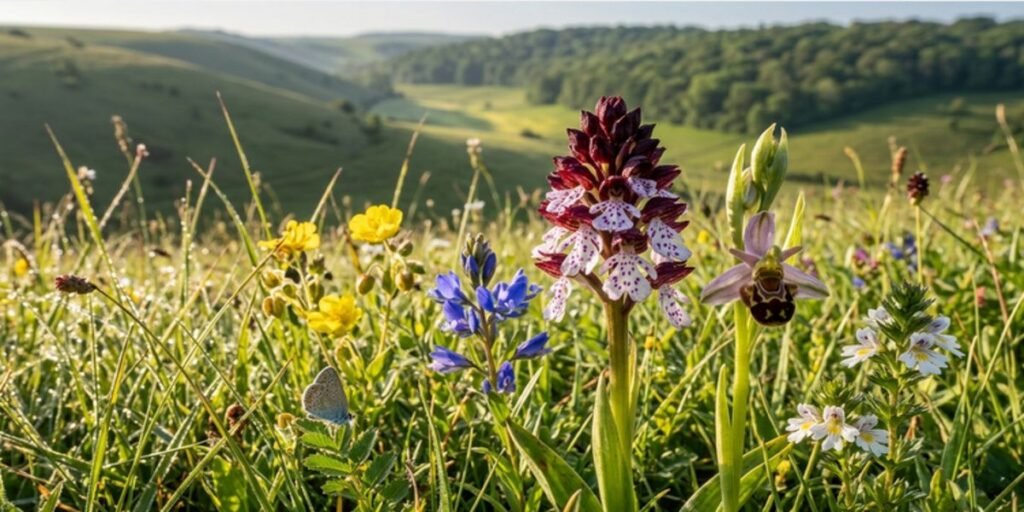
For a 1,100-acre estate like Ashcombe, with its established chalk grasslands, ancient woodlands, and rare wildlife habitats, the BNG potential is substantial. The estate’s location within the Cranborne Chase Area of Outstanding Natural Beauty and International Dark Sky Reserve enhances the “distinctiveness” rating of its habitats, directly impacting unit pricing. Land managers can register sites as biodiversity gain sites and sell off-site units to developers unable to achieve on-site compliance.
Additionally, carbon sequestration through woodland management and soil carbon programs presents parallel revenue opportunities. The UK government’s Nature Investment Standards program, developed by the British Standards Institution in partnership with Defra, is establishing frameworks for high-integrity carbon and biodiversity markets. Landowners who register biodiversity gain sites can sell units under legally binding agreements lasting at least 30 years.
The Ashcombe Estate Appreciation Matrix (2001–2026)
Frequently Asked Questions: Ashcombe Estate
Q: Who owns Ashcombe House now?
A: Guy Ritchie retains sole ownership of Ashcombe House and the surrounding 1,100-acre estate following his 2008 divorce settlement with Madonna. The property is managed through Ashcombe Estates LLP, with Ritchie residing there with his wife Jacqui Ainsley (married July 2015) and their three children
Q: How many acres is the Ashcombe Estate?
A: The Ashcombe Estate encompasses approximately 1,134 acres of rolling chalk downland on Cranborne Chase, spanning the Wiltshire-Dorset border. Its size and uninterrupted layout are factors in its value as a sporting estate.
Q: Is Ashcombe House open to the public?
A: The estate operates a limited access model. While public rights of way remain open, the manor house is private. However, exclusive hospitality is available via the Carousel partnership (limited to 20 guests per weekend, May–Sept). Compton Abbas Airfield, also owned by Ritchie, continues to operate separately, though it is no longer a taproom for Gritchie beers following the brewery’s 2024 closure.
Q: What is Guy Ritchie’s net worth in 2026?
A: Celebrity Net Worth estimates Guy Ritchie’s net worth at around $150 million. This article has not independently verified his total assets, liabilities or film income, and the Gritchie Brewing Company, which the estate ran from 2017 to October 2024, is now closed.
Q: Was ‘The Gentlemen’ filmed at Ashcombe House?
A: Yes. The estate’s WildKitchen — a custom-built, canvas-sided outdoor kitchen beside the lake—featured prominently in the Netflix series The Gentlemen. The exposure has raised the estate’s profile as a hospitality and filming venue.
Q: How does Ashcombe Estate generate revenue?
A: The estate’s documented income streams include driven game shooting and the Carousel hospitality partnership. The Gritchie Brewing Company operated from 2017 to October 2024 and has since closed.
Q: Does Ashcombe engage in Biodiversity Net Gain (BNG)?
A: The estate’s 1,134 acres within an AONB could qualify for biodiversity gain site registration, though there is no public evidence it has done so. The Environment Act 2021 created a mandatory market for BNG units; whether the estate has entered this market has not been publicly confirmed.
Editorial Disclaimer: This article is published for educational and informational purposes. The £35M–£40M estate valuation is the author’s estimate based on comparable sporting-estate prices and public reporting on the estate’s commercial activities. No independent surveyor or agent has confirmed this figure. Guy Ritchie’s net worth figure is sourced from Celebrity Net Worth and has not been independently audited. The Gritchie Brewing Company ceased production in October 2024; references to it throughout this article have been updated accordingly. This article does not constitute financial, legal or property advice. Published by the Elites Mindset editorial team.