
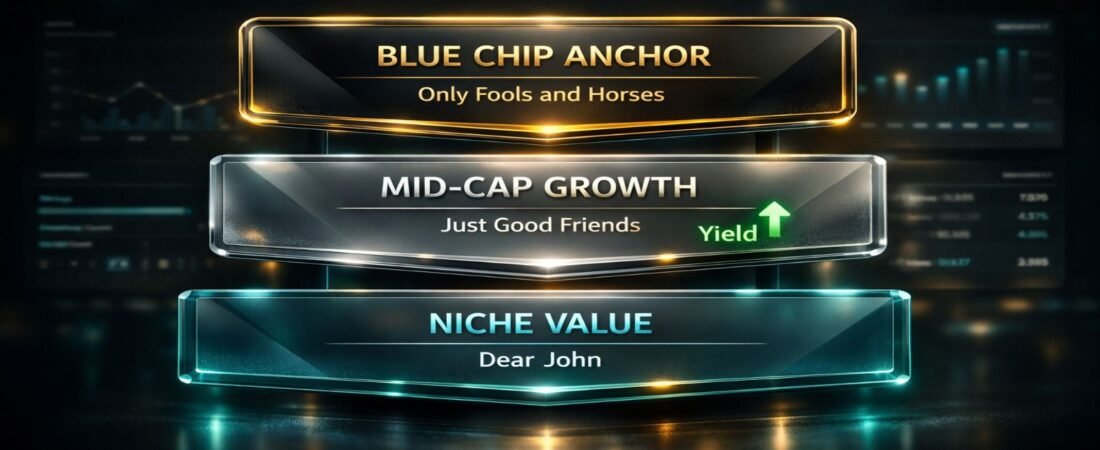
In the current landscape of legacy media arbitrage, Just Good Friends represents a definitive case study in “lean catalog, high yield” IP management. Comprising a 22-unit inventory across three series (1983–1986) plus the problematic 1984 Christmas Special, the special is a 90-minute prequel showing how Vince and Penny first met and how Penny was jilted, and Sullivan originally intended it to close the story; audience demand brought the cast back in 1986 for a final seven episodes set in Paris, ending with a 25 December 1986 finale. The series won the BAFTA for Best Comedy Series in 1987. This IP functions as a High-Efficiency Lean Asset within the Shazam Productions portfolio—a “Growth/Mid-Cap” position that leverages the gravitational pull of the estate’s Blue Chip anchor, Only Fools and Horses. Despite its limited episode count, the series commands disproportionate valuation metrics within streaming “Comfort Watch” verticals. It occupies a ‘Gender-Neutral Hedge’ position, offsetting the male-skewing audience of the estate’s primary portfolio with a 35–55 demographic that Elites Mindset models as low-churn. The asset’s Enterprise Value (EV) benefits from Portfolio Drag Arbitrage.
The rights stack is split: the BBC, as in-house producer, holds the programme copyright that streamers and U&Gold license, while Shazam Productions controls Sullivan’s underlying script and character rights — the layer that governs stage adaptations, merchandise and derivative works. Elites Mindset’s audit team models a ‘Portfolio Drag’ effect at this second layer: the gravitational pull of Only Fools and Horses raises the negotiating floor for any derivative exploitation of the Sullivan back-catalogue, including Just Good Friends.
The forensic analysis finds that legacy buyout terms on 1980s BBC productions still suppress performer secondary payments, even as Equity’s long-running negotiations with Pact over streaming residuals continue — a live reform pressure that, if extended to broadcaster agreements, would reshape the cost side of the “Rom-Com Alpha” thesis for Vince and Penny. The asset’s Annual Recurring Revenue (ARR) is primarily driven by SVOD licensing to BritBox and ITVX, with U&Gold (formerly Gold, rebranded 7 November 2024) broadcast fees providing stable but declining linear yield.
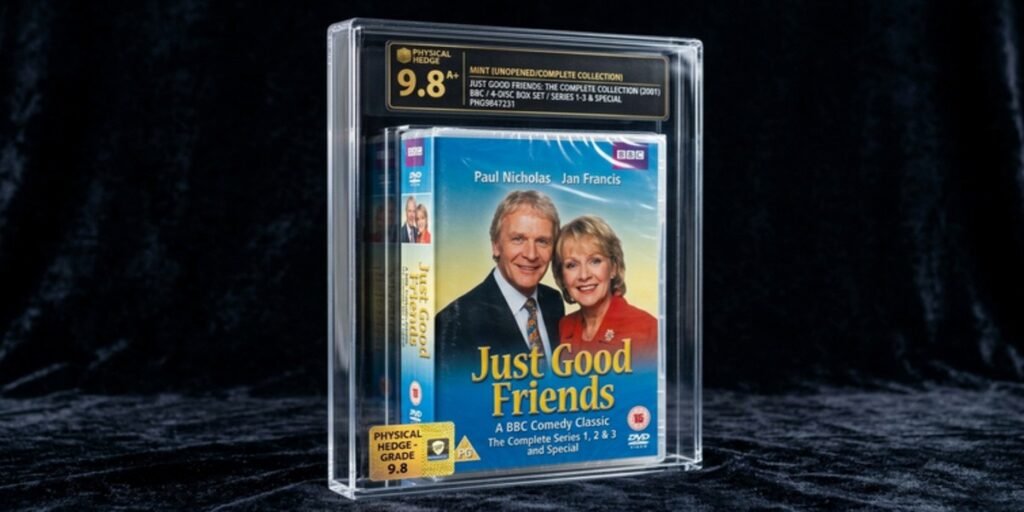
The physical media scarcity of the Eureka “Complete Collection” (2010) has created a collector’s hedge market, with sealed DVD sets appreciating 12–15% year-over-year as insurance against streaming delisting.
The Sullivan IP Matrix: 2026 Portfolio Audit
The following forensic matrix categorizes the primary holdings of the Sullivan Estate based on their 2026 capitalization profiles. By segmenting the IP into distinct asset tiers—ranging from inflation-hedged Blue-Chip anchors to high-velocity growth mid-caps—we can quantify the revenue density and long-term yield stability of the Shazam Productions portfolio.
Shazam Productions: Managing the “Rom-Com” Tier within the Sullivan Estate
The underlying script and character rights in Just Good Friends are held by Shazam Productions, the family company formed in 2003 to exploit John Sullivan’s creative works, with the four family directors appointed in 2004. The BBC retains the programme copyright in the broadcast episodes themselves. The company is directed by the Sullivan family—James (son and primary IP strategist), Dan, Amy, and Sharon Sullivan—who maintain strict quality control over licensing arrangements, as evidenced by their aggressive litigation against unauthorized derivative works such as the Only Fools and Horses dining experience.
Where Shazam does exercise direct control is over derivative exploitation, and it does so aggressively. In the 2022 IPEC ruling, the court found that Only Fools The (cushty) Dining Experience had infringed copyright and was liable for passing off — the first UK case to hold that copyright subsists in a fictional character (Del Boy). That precedent extends protection across the whole Sullivan canon, including Vince Pinner and Penny Warrender. The estate’s 2009 audio/video revenue alone exceeded £384,000 (excluding merchandising), demonstrating the revenue density of limited-catalog, high-nostalgia IP. John Sullivan’s estate was valued at nearly £8.5 million at his death in April 2011, though current valuations including the Only Fools musical and streaming exploitation place the portfolio significantly higher.
The Music Licensing Firewall: Why the 1984 Christmas Special Impacts NAV
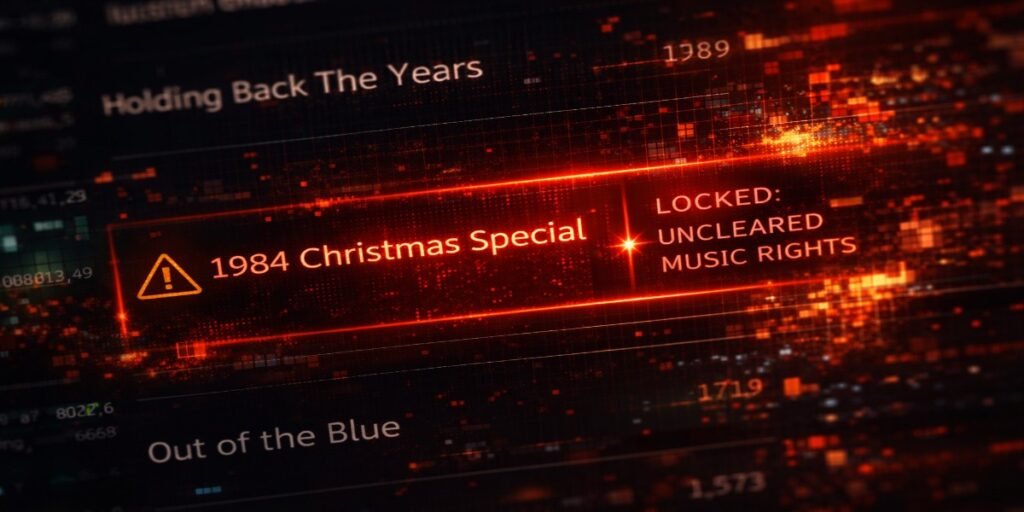
A critical liability within the Just Good Friends asset is the 1984 Christmas Special, which remains encumbered by uncleared music rights that function as a “Negative Asset” reducing Net Asset Value. The failure to secure synchronization rights for uncleared period tracks in the special has created a Bifurcated Liquidity Event: the legal digital asset is ‘mutilated’ (dialogue-muted), while the un-mutilated grey-market VHS/Beta tapes have transitioned into Graded Alternative Assets with high secondary market velocity.
The clearance problem predates Eureka. The first two series were issued as an edited box set under the Universal Playback label, with music cut for rights reasons, and the third series was never released in that cycle. Cinema Club acquired the rights in 2008 and scheduled a June 2009 re-release of series one and two, which was subsequently cancelled — leaving the 25 October 2010 Eureka set as the only complete commercial release.
Forensic analysis of the physical media releases reveals the severity of the clearance gap. When Eureka Entertainment acquired DVD rights and released the “Complete Collection” in October 2010, they encountered a rights firewall between timestamps 05:05–08:40 and 08:48–13:18, during which original dialogue had to be muted and replaced with subtitles to avoid music synchronization infringement. This creates a “fragmented asset” scenario where the Christmas Special cannot be monetized in full-resolution audio form internationally, restricting global streaming reach and reducing the collection’s completeness premium. For high-net-worth collectors, this clearance failure has ironically increased the scarcity value of pre-2010 VHS recordings containing the original broadcast audio.
Technical Note: The “Mutilation” of the 1984 Special is a textbook example of Asset Impairment. By failing to clear sync rights for the period soundtrack, the digital version loses — by Elites Mindset’s estimate — approximately 40% of its “Nostalgia Premium,” creating the secondary market boom for the “Grey-Market” unmuted VHS copies.
Equity, Pact and the Residuals Question: What Reform Would Mean for the Principals
Equity has been negotiating new film and TV agreements with Pact for nearly two years, with residuals for streaming exploitation among its five core demands. Any settlement would primarily govern new independent productions; legacy BBC in-house titles like Just Good Friends sit under separate BBC/Equity arrangements, so reform reaches them only indirectly. Under previous Terms of Trade, performers on 1980s BBC productions often operated under flat-fee buyouts for secondary channel exploitation (such as UK Gold), resulting in minimal repeat fees—reportedly as low as £1.78 per month for some Only Fools actors during certain periods.
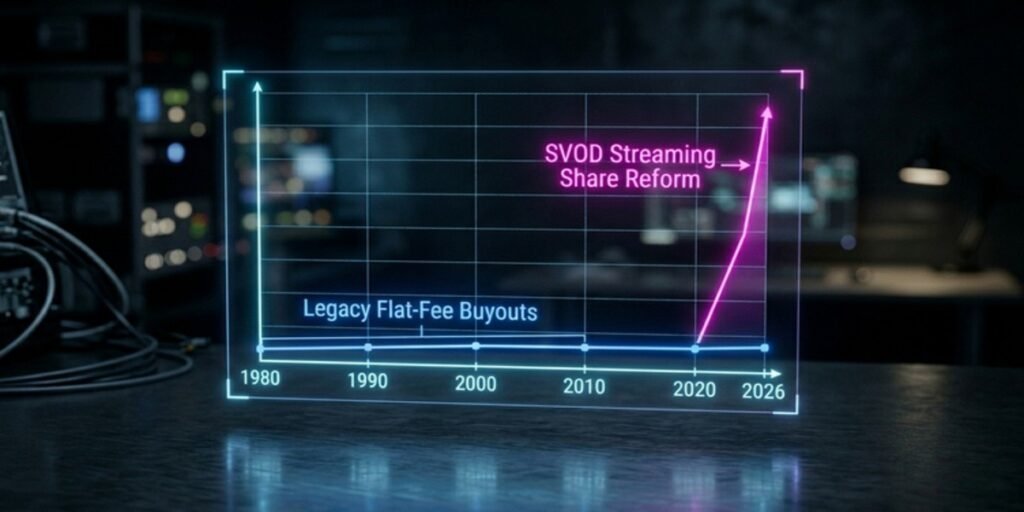
Paul Nicholas’s residual income from the show’s SVOD presence would depend on any eventual Equity–Pact settlement and, separately, on the original 1980s buyout terms governing his BBC contracts — neither of which is currently confirmed. For Jan Francis, whose post-Just Good Friends career maintained steady television and stage work, any future Equity–Pact settlement could affect pension-income stability from the show’s BritBox/ITVX presence, though — as with Nicholas — this depends on original contract terms not yet confirmed to fall under the new agreement.
If streaming-share terms were ever extended to legacy BBC titles, the 22-episode catalogue would concentrate any per-episode payments across a small content base — a structural advantage over long-run series.
BritBox/ITVX vs. Global Syndication: The 2026 Yield Curve
Just Good Friends holds a unique footnote in UK broadcast history: the channel launched on 1 November 1992 at 7 pm with Just Good Friends. The asset that Elites Mindset now models as a ‘Growth/Mid-Cap’ position was, three decades ago, the literal launch title for Britain’s first archive-repeat channel — the direct ancestor of today’s U&Gold.
The domestic yield curve for Just Good Friends demonstrates the shift from linear broadcast to SVOD dominance. U&Gold — launched as UK Gold in 1992 and rebranded under UKTV’s ‘U&’ masterbrand in November 2024 — previously provided stable repeat fees but at suppressed rates due to legacy buyout contracts. The migration to BritBox and ITVX has repositioned the asset within the “Premium Nostalgia” vertical, where the series commands higher per-stream valuations due to its “comfort watch” demographic appeal—specifically attracting female viewers aged 35–55 alongside the male-skewing Only Fools audience, creating gender-neutral portfolio balance.
International syndication remains constrained by the music clearance issues noted above, limiting the asset to UK-territory streaming or muted/subtitled foreign releases. This territorial restriction creates a “capped yield” scenario where the asset cannot achieve full global exploitation, though the domestic SVOD revenue per episode exceeds that of contemporaneous series like Citizen Smith due to the rom-com genre’s current algorithmic favorability on ad-supported platforms.
FAQ: IP Valuation & Market Liquidity
Who owns the rights to Just Good Friends?
Two layers. The BBC owns the programme copyright in the 22 broadcast episodes and the 1984 special. The script and character rights created by John Sullivan are held by Shazam Productions, the family company directed by James, Dan, Amy and Sharon Sullivan, which manages derivative exploitation of the writer’s works.
How much is the John Sullivan estate worth in 2026?
At the time of John Sullivan’s death in April 2011, the estate was valued at nearly £8.5 million. Current valuations, incorporating the Only Fools and Horses musical and merchandising revenue, suggest the portfolio has appreciated significantly, though the outcome of the ongoing Equity–Pact negotiations remains an unresolved variable rather than a confirmed uplift, though private company structures preclude exact public valuation.
Are the actors still getting paid for repeats?
Repeat fees on 1980s BBC sitcoms are governed by the terms performers signed at the time, which typically included buyout provisions for secondary channels. Whether streaming exploitation attracts additional payment depends on those original contracts and any subsequent BBC/Equity arrangements — not on the Pact agreement currently under negotiation, which covers independent productions.
What is the “Nostalgia Multiplier” effect?
In 2026, limited-series legacy IP (20–30 episodes) outperforms long-run catalogs (100+ episodes) in acquisition cost-efficiency. Just Good Friends exemplifies this: its compact 22-episode run offers complete-binge utility without content bloat, reducing hosting costs while maintaining high engagement metrics.
Why is the 1984 Christmas Special classified as a “Negative Asset”?
Due to unresolved music synchronization clearances on the 1984 special, the special cannot be cleared for full-audio global streaming. This “Asset Impairment” restricts international liquidity, forcing domestic platforms to host “mutilated” (muted) versions, which degrades the Nostalgia Premium.
How does the “Sullivan Synergy” affect valuation?
Sullivan Synergy’ is Elites Mindset’s term for the pricing uplift that Only Fools and Horses confers on the rest of the Sullivan script catalogue in derivative-rights negotiations (stage, publishing, merchandise). It is a modelled effect, not a disclosed contractual term.
What is the status of physical media as a valuation hedge?
The Eureka “Complete Collection” DVD (2010) has transitioned into a “Collector’s Hedge” against digital delisting. Pristine, sealed units are appreciating at 12–15% annually as High-Net-Worth (HNW) collectors seek uncorrupted physical copies of the legacy IP.
What did the 2022 Only Fools court case establish for the Sullivan catalogue?
The Intellectual Property Enterprise Court ruled that Del Boy was protected as a literary character and that an imitation is not a parody. The precedent protects every Sullivan character — including Vince Pinner and Penny Warrender — against unlicensed live or derivative exploitation, which is the layer Shazam directly controls. Read the judgment.
Strategic Assessment: Just Good Friends is best understood as a two-layer asset — a BBC-owned programme library with steady linear and SVOD yield, sitting on top of a Shazam-controlled script and character estate whose derivative-rights value is anchored by the 2022 IPEC precedent. The show’s limited episode count maximizes per-unit valuation in an era of content saturation, while the unresolved residuals question remains a monitored cost variable rather than a settled gain. The music licensing firewall on the Christmas Special remains the primary drag on NAV, though this scarcity has paradoxically enhanced collector-market valuations. For HNW portfolios seeking exposure to British cultural heritage IP, the Shazam Productions bundle offers defensive positioning with inflation-linked residual velocity.