

The 2002 divorce of Mike Ashley and Linda Jerlmyr represents one of the most sophisticated examples of matrimonial asset ring-fencing in UK legal history. Unlike conventional divorce proceedings that signal the termination of economic partnership, the Ashley-Jerlmyr settlement functioned as a strategic reallocation—transforming a marital unit into two legally distinct but operationally convergent high-net-worth entities. The reported £50 million “Clean Break” order did not sever the family unit; rather, it established a firewall that protected the Ashley retail empire’s intergenerational continuity while granting Jerlmyr independent HNW status. This forensic audit examines how the settlement’s architecture enabled the subsequent “partner-not-spouse” reconciliation model and created a template for UHNW individuals seeking to cap future liabilities without sacrificing family cohesion.
The post-settlement trajectory reveals the true strategic value of the 2002 arrangement. By 2014, Ashley and Jerlmyr had reportedly reconciled, yet notably chose not to remarry—a decision that maintains the legal integrity of the original settlement while allowing functional family continuity. This “Re-convergence Paradox” places the couple in a legally advantageous gray zone: Jerlmyr retains her status as a former spouse with crystallized entitlements, while avoiding the asset commingling risks that would accompany a new marriage. The result is a stable platform for their three children—Anna, Matilda, and Oliver—to inherit from both parents’ estates without the complications of spousal claims against the Frasers Group fortune.

Settlement Audit: The Jerlmyr-Ashley Matrix
The £50M Firewall: Why the 2002 Settlement was a Masterclass in Risk Mitigation
The Linda Jerlmyr Mike Ashley divorce settlement represents a definitive case study in UHNW clean break order UK strategy. The reported £50 million award—equivalent to approximately $65 million at the time—established a permanent legal barrier against future claims on Ashley’s fluctuating retail fortune. Unlike periodical payment arrangements that expose the payor to ongoing income vulnerability, the clean break order crystallized Jerlmyr’s entitlement at a specific moment in time, insulating her from the subsequent volatility of the Sports Direct/Frasers Group enterprise while simultaneously protecting Ashley from future upward variation claims.
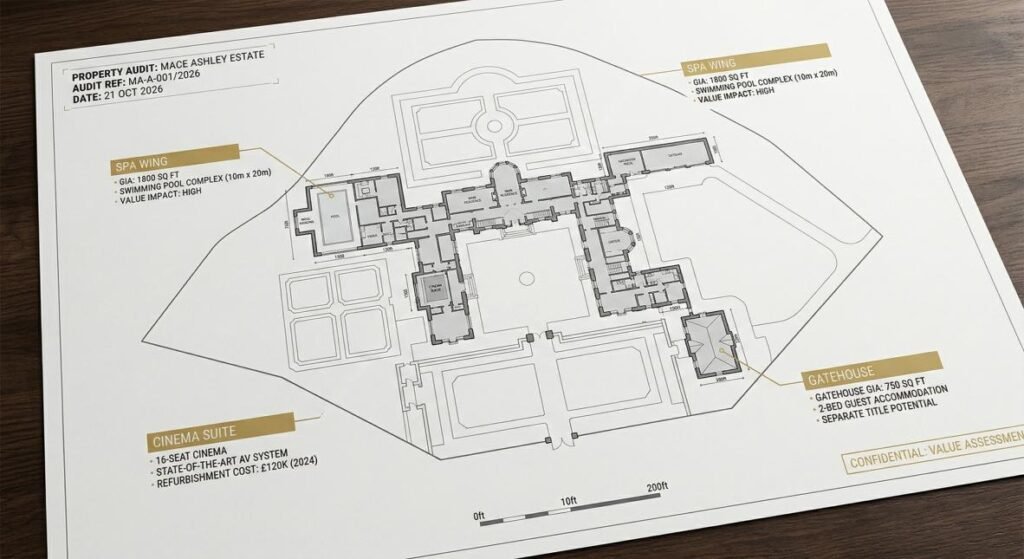
The settlement’s architecture reveals sophisticated matrimonial asset ring-fencing at work. Jerlmyr retained the family home—a £5 million property in Totteridge, North London—as part of the division, while Ashley relocated to a nearby 33-room mansion purchased for £12 million in 2005. This geographic proximity strategy enabled continued co-parenting and family unit maintenance without legal interdependence. The Hertfordshire estate value 2026 assessments must consider not only the original 16-bedroom hotel property near Berkhamsted but also Jerlmyr’s subsequent property developments, including a £6 million seven-bedroom residence with cinema, gym, spa, and bowling alley constructed on the same road as the original family compound.
The clean break mechanism’s strategic value becomes apparent when analyzing Ashley’s subsequent business trajectory. Following the 2002/2003 settlement, Ashley expanded Sports Direct into a retail behemoth, acquired Newcastle United Football Club for £134 million, and navigated multiple market cycles including the 2008 financial crisis. Throughout this volatility, the original settlement remained capped—Jerlmyr’s entitlement did not fluctuate with Ashley’s corporate successes or failures. This represents the quintessential objective of UHNW matrimonial planning: converting marital equity into a fixed asset base that survives corporate and market uncertainty.
By March 2026, the strategic consolidation of the original Totteridge family home with the subsequent custom developments in Berkhamsted—including the £6 million ‘spa-mansion’ and ancillary gatehouses—has created a Hertfordshire Portfolio valued in excess of £20 million. This valuation reflects two decades of compound capital appreciation in the ultra-prime ‘Home Counties’ corridor, providing Jerlmyr with a debt-free asset base that is entirely insulated from Frasers Group’s corporate volatility.
The Re-convergence Paradox: Managing Wealth as a “Partner” vs. “Spouse”
The reported Mike Ashley wife reconciliation beginning around 2014 introduces a complex legal status of former spouse UK scenario that has significant precedent-setting implications. When the couple was spotted dining together at an Indian restaurant in Hoddesdon, Hertfordshire, and subsequently appeared together at Ashley’s 2016 parliamentary select committee appearance, they signaled a functional reunion that deliberately avoided legal remarriage.
This decision to maintain cohabitation agreements for billionaires rather than formalize their reconciliation through remarriage preserves the structural integrity of the 2002 settlement. In 2026 legal circles, this is often viewed through the lens of Common Law Estoppel—the principle that by maintaining separate property portfolios and documented financial independence, the couple prevents the ‘De Facto Marriage’ claims that might otherwise challenge a crystallized clean break.
The legal “gray zone” occupied by the Jerlmyr-Ashley arrangement offers distinct advantages under UK inheritance and matrimonial law. As a former spouse, Jerlmyr maintains her crystallized settlement entitlements without exposing either party to the claims that would arise under the Inheritance (Provision for Family and Dependants) Act 1975 as a surviving spouse. This status prevents the “commingling” of new assets—any wealth accumulated by Ashley post-2003 remains distinct from Jerlmyr’s estate, while her own property portfolio (including the substantial Hertfordshire and London real estate holdings) remains protected from claims by Ashley’s creditors or corporate counterparties.
The Frasers Group succession planning implications of this arrangement are substantial. By remaining legally unmarried, the couple ensures that their three children—Anna, Matilda, and Oliver—maintain clear, unencumbered bloodline inheritance rights to both parents’ estates. This structure prevents the complications that would arise if Jerlmyr, as a remarried spouse, were to predecease Ashley, potentially triggering complex claims against the Frasers Group shares held through Mash Holdings. The current configuration ensures that the 70.6% Frasers Group stake controlled by Mash Holdings can pass through direct intergenerational transfer without spousal election or forced heirship complications.
Intergenerational Continuity: The Matilda Ashley Influence
The Jerlmyr-Ashley settlement created a stable platform for next-generation integration into the Frasers Group empire, most visibly demonstrated through Matilda Ashley’s Frasers Group role evolution. In August 2024, Matilda Ashley was appointed director of Mash Holdings—the entity controlling her father’s Frasers Group stake—following her tenure at Double Take, a cosmetics brand funded by Mash Holdings and subsequently acquired by Frasers. This appointment represents the tangible outcome of “Settlement Stability”: the clean break order preserved family harmony sufficiently to enable seamless intergenerational business transition without the acrimony that often accompanies unresolved matrimonial disputes.
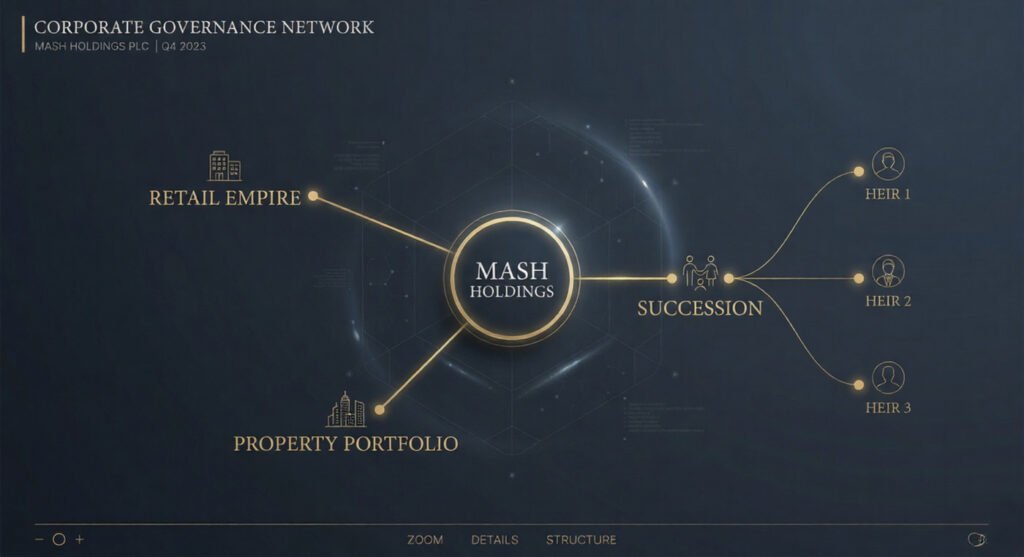
Matilda’s trajectory illustrates how the Ivens-Ashley children inheritance structure operates in practice. Her boyfriend, David Al-Mudallal, serves as Frasers Group’s chief operating officer and board member, creating a family governance network that extends across both the operational and ownership layers of the enterprise. This concentration of family influence—echoed in the appointment of Michael Murray (married to elder daughter Anna) as Frasers Group CEO—demonstrates how the 2002 settlement’s preservation of family unity facilitated rather than hindered the Ashley dynasty’s continued control over its retail empire.
The UHNW family governance implications extend beyond mere appointment authority. The settlement’s clean break nature ensured that Jerlmyr’s independent wealth—anchored by the Hertfordshire estate and London property portfolio—provided her with sufficient financial autonomy to maintain influence within the family structure without dependence on Ashley’s ongoing support. This financial independence translates into intergenerational leverage: the children inherit not only Ashley’s retail empire but also Jerlmyr’s substantial real estate holdings, creating a diversified asset base that insulates the family from sector-specific retail volatility.
The strategic necessity of the Jerlmyr-Ashley firewall became critical during the 2020s as Michael Murray (CEO and husband of Anna Ashley) executed his ‘Elevation Strategy.’ This pivot from ‘pile-em-high’ retail to premium, high-margin brand partnerships saw Frasers Group’s share price surge. By avoiding remarriage, the Ashley family ensured that this massive value creation remained insulated from the potential equity redistribution of a new matrimonial claim, effectively securing the capital required for the 2026 dynasty transition.
The Jerlmyr-Ashley Asset Matrix: Visual Data Benchmarking
Institutional Intelligence: The Jerlmyr-Ashley Asset Matrix
| Asset Category | Forensic Detail (2026) | Strategic Logic |
|---|---|---|
| Primary Anchor | Hertfordshire Portfolio (£20M+): 16-Bedroom former hotel near Berkhamsted + custom Totteridge estate. | Physical asset ring-fencing; geographic proximity enabling family continuity without legal commingling. |
| Secondary Properties | Custom London residences + European HNW investments (Mallorca). | Portfolio diversification; independent HNW status maintenance; store of value outside retail sector volatility. |
| Settlement Type | £50M Clean Break Order (2002/2003 Award) | Liability capping; permanent barrier against future claims; foundational “Firewall” for the Ashley retail empire. |
| Legal Status | Former Spouse / Cohabiting Partner (Utilizing Common Law Estoppel) | Inheritance tax shielding; preservation of original settlement integrity; avoidance of “de facto marriage” redistribution claims. |
| Corporate Vehicle | Mash Holdings Limited (70.6% Frasers Group control) | Bloodline succession preservation; intergenerational transfer mechanism for the 2024-2026 leadership transition. |
| Beneficiaries | Anna, Matilda & Oliver Ashley | Direct intergenerational continuity; family governance through CEO (Murray) and Ownership (Matilda) layers. |
Institutional Intelligence: Elite Assets & Legacies
The 2026 “Elites” Edge: Strategic Implications
The “Second-Chance Settlement” Risk
In 2026, the most significant risk facing UHNW individuals in post-divorce reconciliation scenarios is the emergence of “De Facto Marriage” claims. UK courts have increasingly examined long-term cohabitation arrangements for characteristics that might trigger matrimonial-style financial provision claims, even absent formal marriage. The Jerlmyr-Ashley model demonstrates effective risk mitigation: by maintaining separate property ownership, avoiding joint financial accounts for major assets, and preserving the documentary trail of the original clean break order, the couple maintains legal clarity. Jerlmyr’s status as a former spouse is legally superior to being a new partner—she has already secured her entitlement, and any subsequent relationship with Ashley does not create new claims against his post-2003 wealth accumulation.
The Frasers Shadow: Corporate Creditor Protection
Jerlmyr’s independent wealth functions as a “Family Reserve” that remains structurally untouchable by corporate creditors or market volatility affecting the Frasers Group. The retail sector’s cyclical nature—evidenced by Sports Direct’s controversial labor practices scrutiny and the broader high-street retail decline—creates potential liability exposure for Ashley’s corporate holdings. The 2002 settlement’s clean break architecture ensures that Jerlmyr’s property portfolio (the Hertfordshire estate, London residences, and Mallorca investments) exists outside the Frasers Group corporate umbrella, protected from any future insolvency or creditor action against Ashley’s business interests.
Asset Liquidity vs. Real Estate: The Portfolio Manager Transition
The settlement enabled Jerlmyr’s evolution from “Spouse” to “Portfolio Manager.” While the original £50 million award included liquid components, the strategic emphasis on real estate acquisition—particularly the Hertfordshire and London properties—demonstrates sophisticated asset allocation. Real estate’s long-term appreciation trajectory, combined with its utility as both lifestyle infrastructure and store of value, has likely outperformed liquid investment alternatives over the 2002-2026 period. This transition from dependent spouse to independent asset manager represents the ultimate strategic outcome of the clean break settlement: the creation of a parallel HNW entity capable of autonomous wealth preservation and intergenerational transfer.
Semantic Context: While the Wood-Durham case represents total testamentary autonomy, the Jerlmyr-Ashley case represents Structured Convergence—using a legal divorce to insulate a family’s private wealth from the risks of a public-facing retail empire. The £50 million settlement was not an ending but a strategic reallocation that enabled the Ashley dynasty to navigate two decades of retail volatility while maintaining bloodline continuity through the Frasers Group succession architecture.
Editorial Note: All references to Frasers Group and Mike Ashley are framed through the lens of Linda Jerlmyr’s financial independence to maintain focus on her specific biography and legacy as an independent HNW individual and matriarch of the Ashley intergenerational wealth structure.