
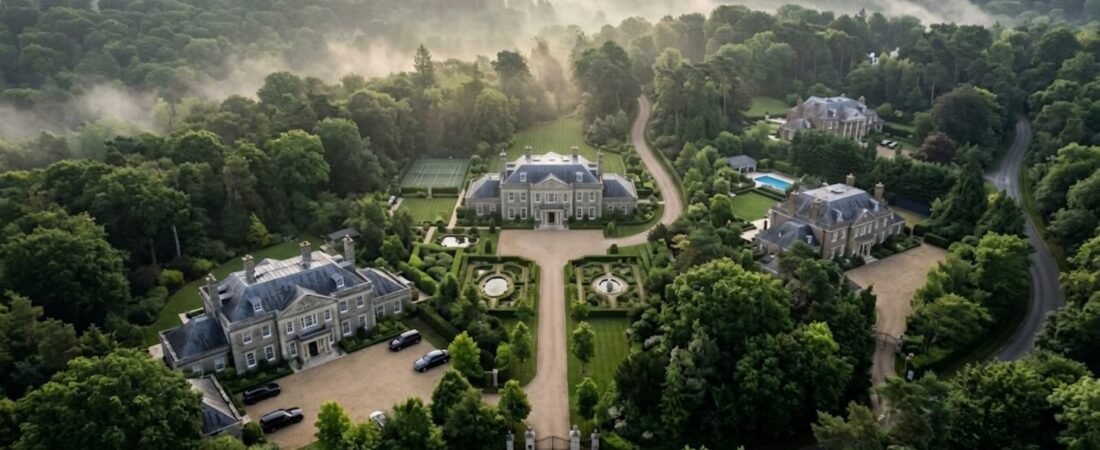
Surrey’s ultra-prime gated estates represent the apotheosis of land-backed wealth preservation—physical fortresses where restrictive covenants, debenture-based social filtering, and regulatory moats conspire to create asset classes immune to market volatility. Wentworth Estate and St George’s Hill are not merely neighborhoods; they are legacy fortresses engineered through decades of planning restrictions and exclusivity mechanisms that artificially constrain supply while global demand for UK safe-haven assets intensifies.
FINANCIAL INTELLIGENCE SUMMARY (CLICK TO HIDE/SHOW)
Asset Classification: Surrey’s gated enclaves function as institutional-grade gold moats, where value is derived from “Engineered Scarcity” rather than traditional residential market trends.
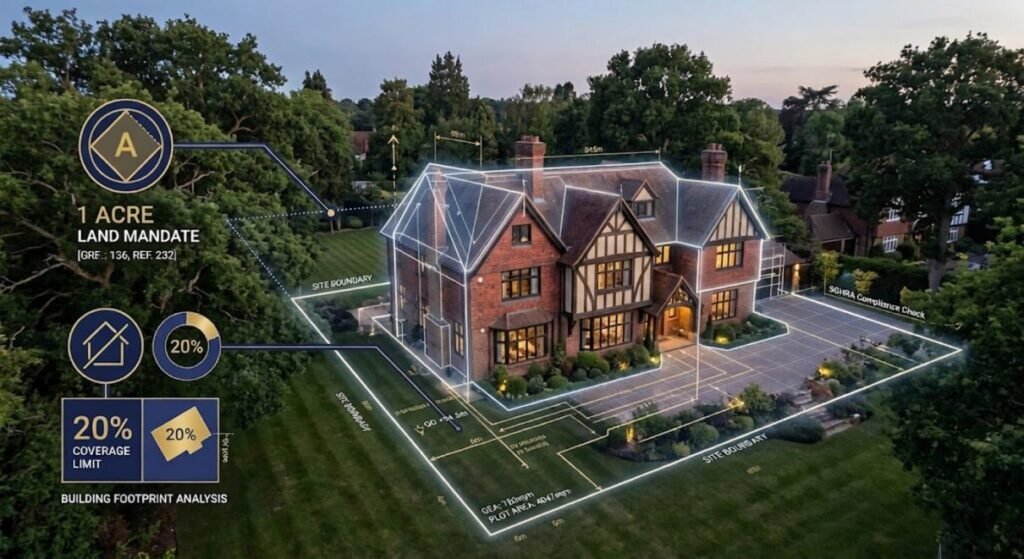
The Regulatory Moat: St George’s Hill utilizes legislative protection (Estate Act 1990) to maintain a rigid 1-acre/20% coverage mandate. This “Canopy Cap” prevents density inflation, effectively floor-pricing plots at £4M+ based purely on development rights.
Strategic Wealth Mechanisms:
- Subterranean Arbitrage: The “Iceberg House” model allows for 12,000+ sqft of uncounted asset volume. By building below ground, owners bypass surface GEA limits to create £20M+ assets on restricted plots.
- Social Firewalling: Wentworth’s transition to a debenture-only model (£175K-£250K) functions as a high-liquidity financial filter, ensuring the resident demographic remains a closed-loop network of UHNW individuals.
Privacy Infrastructure: Security is treated as a capital-appreciating utility. ANPR, drone bans, and gated sovereignty allow these estates to act as “Sovereign Bubbles,” shielding global capital from local volatility and public scrutiny.
Liquidity Profile: While Days on Market (DOM) remain high due to niche profiling, capital growth (+18-21%) is secured by the permanent depletion of supply in the UK’s most sought-after ultra-prime postcodes.
Comparative Asset Profile: Wentworth vs St George’s Hill Development Moats
The following data outlines the institutional barriers to entry and development within both core estates as of 2026:
St George’s Hill: The Architectural Fortress & The “Tarrant Style” Legacy
St George’s Hill operates under a regulatory framework that makes it virtually impossible to overdevelop, creating artificial scarcity that preserves asset values across generations. The St. George’s Hill Estate Act 1990 establishes the foundational restriction: no dwelling-house may be erected on a site of less than one acre. This “One House Per Acre” mandate—legally enforceable through the St George’s Hill Residents’ Association (SGHRA)—ensures that even as land values appreciate, density cannot increase to meet demand.
The most granular constraint, however, is the preservation of the “Tarrant Style”—a tribute to the estate’s original builder, W.G. Tarrant. Unlike other luxury postcodes where developers clear-cut plots to maximize buildable area, the SGHRA Planning Guidelines mandate the maintenance of a specific canopy density to preserve the estate’s “wooded character.” This legal requirement prevents the removal of mature trees and dictates that any new structure must be secondary to the landscape. This “Canopy Cap” creates a paradox: you may own the acre, but you are legally prohibited from reclaiming it from the forest. This is what ultimately forces the deployment of subterranean capital; since the horizontal and vertical surface planes are locked by Tarrant’s legacy, the only remaining direction for asset expansion is down.
Architectural restrictions extend to every visible inch. The guidelines mandate that the Gross External Floor Area must not exceed 20% of the Plot Area. Two storeys is the standard permitted height, and any structures must be more than 6 metres from the plot boundary. Fencing is entirely prohibited, and the estate’s celebrity pedigree—including John Lennon, Elton John, Tom Jones, and Jenson Button—reinforces its status as a self-reinforcing sanctuary for the cultural elite.
Wentworth Estate & The “Social Firewall” Debenture
While St George’s Hill restricts supply through planning law, Wentworth Estate restricts social access through financial engineering. In 2014, the Thai-Chinese investment company Reignwood Group purchased Wentworth Club for £135 million and immediately moved to convert the club into a debenture-only fortress.
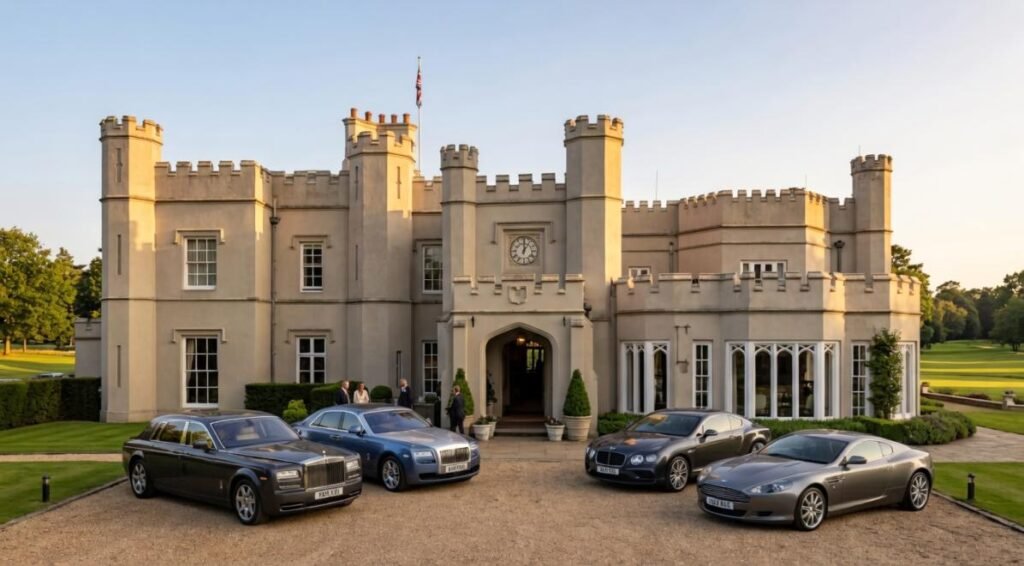
The debenture functions as a “Social Firewall”—a brutal, highly effective financial filter. Membership was cut from approximately 4,000 to roughly 800, with debentures priced in the £175,000–£250,000 range and annual fees reaching £20,000. This six-figure entry fee ensures that only those with substantial liquid wealth can access the club facilities, creating a self-selecting community of high-net-worth individuals that reinforces property values across the estate.
The estate’s resident roster reflects this exclusivity. Rory McIlroy, Ernie Els, and Justin Rose maintain homes here, alongside former footballers Andriy Shevchenko and the late Sir Bruce Forsyth. This concentration of sporting and media elite creates network effects where property ownership confers access to influential social circles—a non-monetary return on investment that justifies the estate’s premium pricing, where core mansions on the main islands routinely exceed £20M.
Institutional Intelligence: Asset Audits & Real Estate
The “Privacy Moat”: Physical and Digital Security Infrastructure
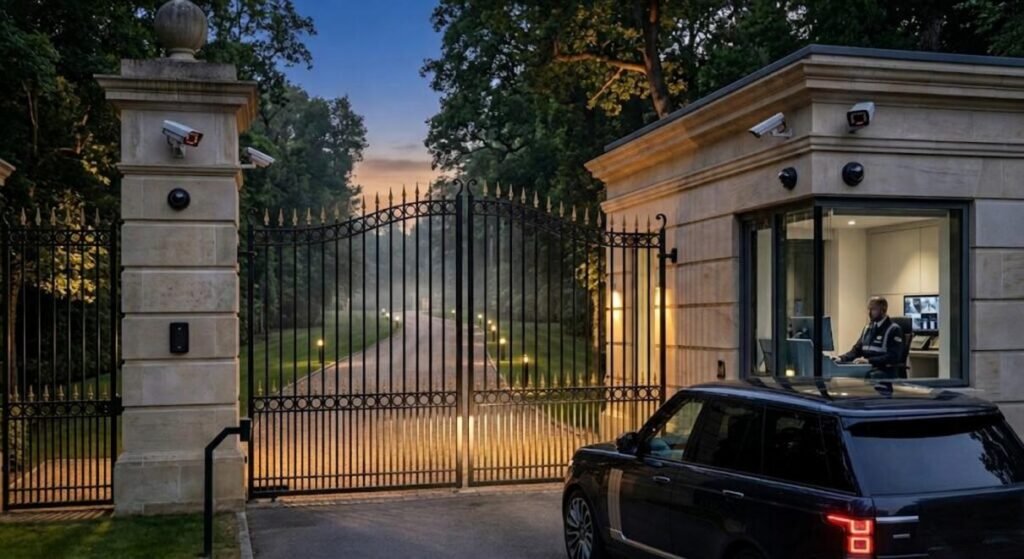
What buyers are actually purchasing is not merely real estate, but comprehensive privacy infrastructure. Automatic Number Plate Recognition (ANPR) systems operate at all entry points, and private security patrols maintain a 24/7 presence. CCTV networks cover internal roads, and drone-restricted airspace—enforced through estate bylaws—prevents aerial photography of sensitive residences.
The security infrastructure extends to digital and operational realms. At St George’s Hill, contractors must be licensed by the Residents’ Association, with owners responsible for submitting contractor names at least two business days before entry. For UHNW individuals—particularly those from jurisdictions with unstable political environments—these privacy moats provide tangible security value that justifies the massive property price premiums over non-gated Surrey residences. They function as sovereign bubbles within the UK.
Institutional Intelligence: Trade & Digital Portals
The Rebuild Ratio: Subterranean Arbitrage
At St George’s Hill, the restrictive 20% plot coverage limit makes surface-level expansion impossible. The regulatory response has been subterranean: basements are excluded from Gross External Floor Area calculations, provided they don’t exceed 25% larger than the ground floor. Specialist developers now construct “iceberg houses” with minimal visible footprints and vast leisure complexes below—swimming pools, cinema rooms, bowling alleys, and staff quarters.

This subterranean arbitrage has transformed construction economics. A buyer purchasing a £6M knockdown on a one-acre plot can spend £10M excavating and fitting out a 12,000 sqft basement complex, creating a £20M+ total asset with space that would cost £50M+ in central London and cannot be replicated above ground in Surrey. This hyper-local property strategy mirrors broader macro trends among the British industrial elite; while global capital chases volatile digital assets, the buyers of Wentworth and St George’s Hill are purchasing tangible, immovable wealth. These Surrey gold moats represent the ultimate asset shield: physical, legally protected, and permanently scarce.
Market Performance: Capital Preservation & Liquidity Analysis
Estate Intelligence: Frequently Asked Questions
Which is more expensive, Wentworth or St George’s Hill?
While algorithmic portals often report averages as low as £800k for the broader postcode, core-estate assets are significantly higher. St George’s Hill maintains a one-acre minimum that drives land values to £4M–£5M per building plot, with finished mansions reaching £20M+. Wentworth mirrors these valuations for its premium “Main Island” plots, though it offers more varied entry points for smaller properties on the estate perimeter.
How much does it cost to join the Wentworth Club?
Since the 2014 Reignwood acquisition, the club has operated on a debenture-only model. Entry requires a debenture payment of £175,000–£250,000, plus annual fees of £16,000–£20,000. Membership is capped at approximately 800 individuals, serving as a social firewall to preserve the estate’s exclusivity.
What is the “Tarrant Style” mandate at St George’s Hill?
W.G. Tarrant was the original builder of the estate. The SGHRA guidelines mandate that any new development must respect the “wooded character” of his original vision. This includes a Canopy Density Cap, which prevents owners from clear-cutting plots and requires mature trees to remain the dominant visual feature of the landscape.
Who are the most notable residents of these estates?
St George’s Hill has historically attracted music legends like John Lennon, Elton John, and Tom Jones. Wentworth is the preferred enclave for the sporting elite, housing legends such as Rory McIlroy, Ernie Els, and Andriy Shevchenko, along with major industrial billionaires.
Are basements allowed on these estates?
Yes, particularly at St George’s Hill. Because the surface footprint is capped at 20% of the plot, owners utilize “Subterranean Arbitrage.” Basements are currently excluded from Gross External Floor Area (GEA) calculations, allowing developers to build massive “iceberg” complexes with pools, cinemas, and car galleries that do not count against planning limits.
Is the public allowed to enter these estates?
Technically, these are private lands with restricted access. While some public footpaths may exist near the perimeters, the roads are privately owned and maintained. Entry is monitored by 24/7 gatehouses, ANPR (Automatic Number Plate Recognition), and mobile security patrols to ensure total resident privacy.