
Salman Ahmad
Co-Owner & Technical Lead
Published
March 21, 2026
Khatabook Web Login for PC: Step-by-Step Desktop Guide (2026)
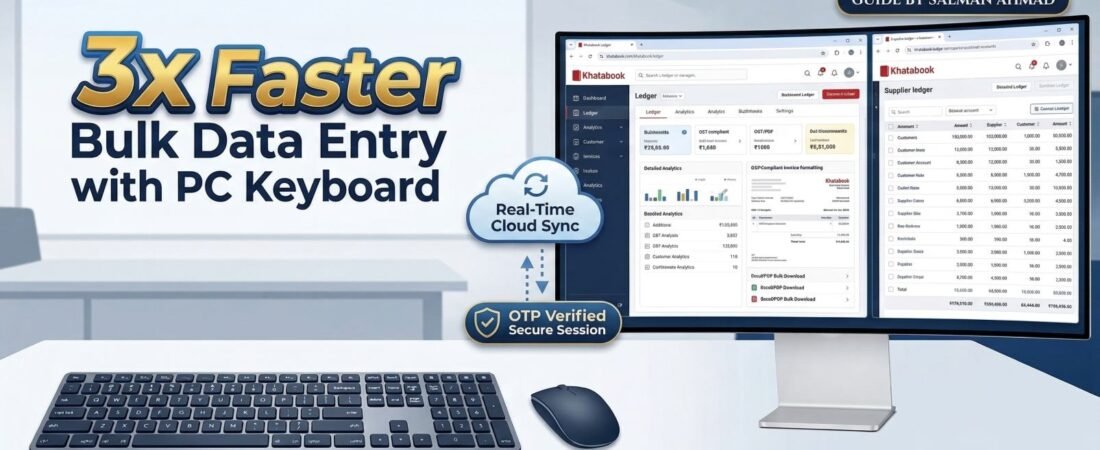
As part of our broader Technology Strategy for SMEs managing business ledgers on a smartphone screen becomes inefficient when you’re processing hundreds of daily transactions, generating month-end reports, or reconciling accounts across multiple customer accounts. The transition from mobile to desktop isn’t merely about screen size—it’s about operational velocity. A full physical keyboard enables bulk data entry at 3x the speed of touch interfaces, while the expanded display real estate allows for side-by-side ledger comparison, advanced PDF report generation, and seamless multi-window workflows that transform your back office into a command center.
This guide provides the definitive 2026 protocol for accessing your Khatabook data via desktop—no emulators, no third-party software, no security compromises. We focus exclusively on the official browser-based method that maintains end-to-end encryption while delivering the full feature set of the mobile application through Khatabook’s cloud infrastructure.
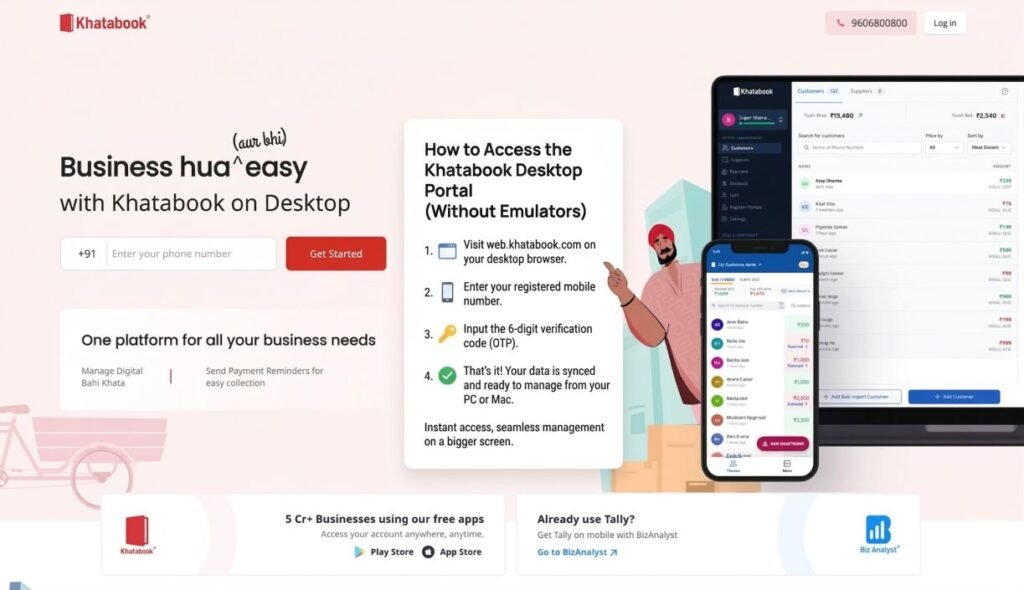
How to Access the Khatabook Desktop Portal (Without Emulators)
The Emulator Myth: Many outdated guides instruct users to download Bluestacks or similar Android emulators—heavy, ad-filled software that consumes 4GB+ of RAM and introduces security vulnerabilities. This is unnecessary. Khatabook operates on a cloud-native architecture that enables direct browser access without intermediary software.
The Official Browser Method:

-
Open Your Browser
Launch any modern web browser (Chrome, Firefox, Edge, or Safari). Ensure you’re running the latest version for optimal security protocols. -
Navigate to the Official Portal
Visit khatabook.com or the official Khatabook web interface. This connects directly to Khatabook’s cloud servers rather than routing through emulator virtualization layers. -
Enter Your Registered Mobile Number
Input the 10-digit mobile number associated with your Khatabook account. This serves as your primary identifier across all Khatabook services. -
Request and Input the 6-Digit OTP
Click “Send OTP” to trigger an SMS verification code to your registered number. Enter the 6-digit code within the 5-minute validity window. Khatabook’s OTP system functions as a time-sensitive, single-use password that validates device authorization without storing persistent credentials on the PC. -
Sync and Access Your Data
Upon successful authentication, your complete ledger database synchronizes from Khatabook’s cloud servers to your browser session. This includes all customer accounts, transaction histories, payment reminders, and outstanding balance data. -
Enable “Remember This Device” (Optional)
For trusted personal computers, select the remember device option to streamline future logins while maintaining role-based access controls.
Critical Security Note: Your data remains encrypted throughout this process. Khatabook’s privacy architecture stores credit and payment records in cloud-based environments with third-party infrastructure providers, ensuring that a stolen PC or compromised browser session cannot access underlying financial data without the mobile-device-linked OTP.
Why Transition Ledgers from Mobile to PC?
While a smartphone provides the necessary agility for the storefront, a desktop environment offers the high-velocity infrastructure required for professional-grade financial oversight. Transitioning to a PC is a strategic shift from “transactional entry” to “strategic auditing”—allowing for greater precision, faster data processing, and the analytical depth needed to scale a business’s back-office operations.
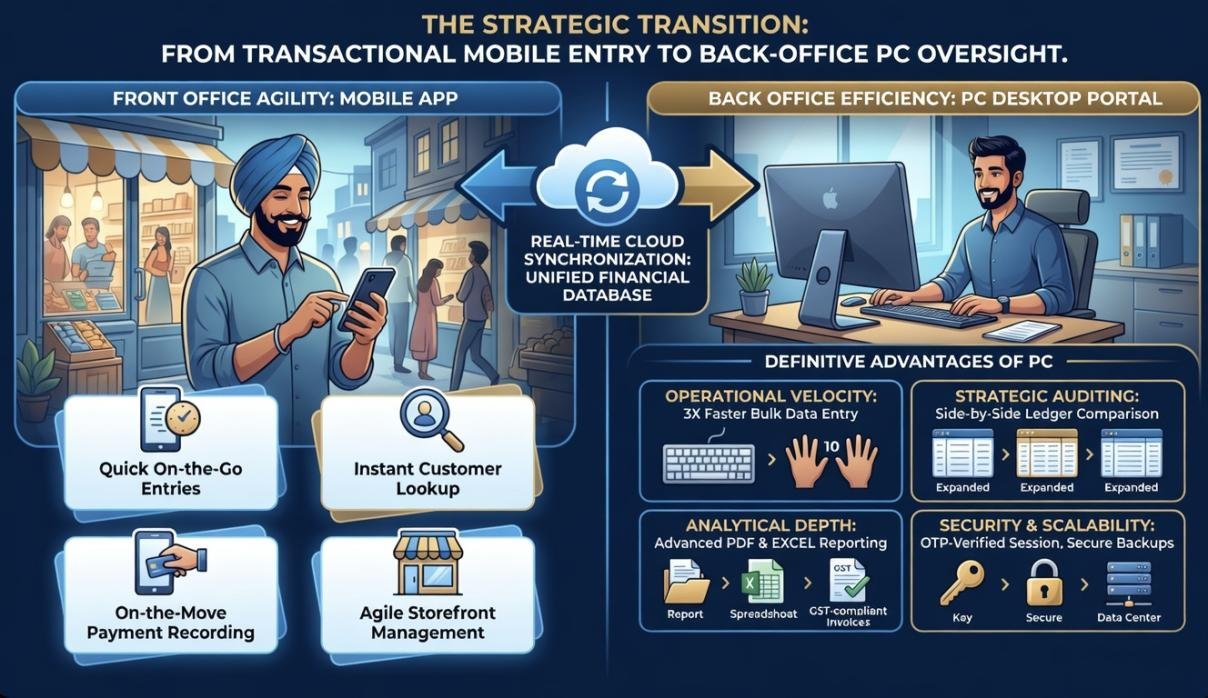
The Back Office Efficiency Model
While the Khatabook mobile application (Android app and IOS App) serves the shop counter—quick transaction entry, instant customer lookup, and on-the-move payment recording—the khatabook web dashboard is architected for back office operations: end-of-month accounting, bulk report generation, and secure ledger auditing.
Data Entry Velocity
Physical keyboards enable bulk transaction entry at speeds impossible on touchscreens. For businesses processing 100+ daily entries, this efficiency gain translates to hours saved weekly, reducing manual labor and the potential for entry errors common on mobile interfaces.
Advanced Reporting
The desktop interface enables download khatabook reports pc functionality—exporting comprehensive Excel spreadsheets, PDF ledgers, and GST-compliant invoices that require formatting precision unavailable on mobile screens. Generate profit and loss statements, balance sheets, and party-wise outstanding reports with single-click export capabilities.
Multi-Window Workflow
Modern browsers allow you to cross-reference supplier ledgers against customer accounts in separate tabs. You can reconcile bank statements alongside transaction histories and manage inventory spreadsheets while maintaining real-time cloud sync across all devices.
Real-Time Synchronization
Changes made via the digital ledger software windows interface instantly propagate to mobile devices and vice versa. This cloud-based access model ensures that your shop counter staff and back office accountant operate on identical data sets without manual file transfers or version conflicts.
Web vs. Mobile Efficiency Matrix
Choosing between the mobile app and the desktop portal is not merely a matter of preference; it is about matching the specific business task to the most efficient interface. While the mobile application remains the definitive tool for real-time customer engagement and on-the-spot entries, the following matrix highlights the architectural advantages of the PC version for intensive data reconciliation and strategic business oversight.
| Function | Mobile Interface | PC Web Dashboard |
|---|---|---|
| Data Entry | Touch keyboard, single-thumb operation, slower for bulk inputs | Physical keyboard, 10-finger typing, hotkey shortcuts, bulk entry capable |
| Reporting | Quick view summaries, limited export formats | Excel/PDF bulk downloads, GST-compliant formatting, detailed analytics |
| Multi-Account Management | Single-account focus, swipe navigation | Side-by-side ledger comparison, multi-tab account switching |
| Inventory Management | Basic barcode scanning, single-item entry | Batch updates, bulk uploads, warehouse transfer management |
| Screen Real Estate | 6-inch display, compressed data views | Full HD/4K displays, expanded tables, chart visualization |
| Offline Capability | Limited offline mode with delayed sync | Requires persistent connection, real-time sync priority |
| Security Model | Biometric + PIN | OTP-verified session, encrypted backups, audit trails |
Enterprise Utility Intelligence: Portal Access Guides
Troubleshooting Common Khatabook Login & OTP Issues
Even the most robust cloud-native systems can encounter localized authentication or synchronization hurdles. Whether you are facing a delayed OTP or a browser cache conflict, these targeted troubleshooting steps provide the immediate technical fixes required to restore your desktop access and maintain your ledger’s data integrity.
01 Delayed or Non-Receiving OTP
Symptom: The 6-digit verification code fails to arrive via SMS within the 60-second window.
- Verify Network Infrastructure: Ensure your mobile device has a strong cellular signal. OTP delivery relies on carrier SMS gateways rather than mobile data or Wi-Fi.
- Audit SMS Filters: Check your device’s spam or “Blocked” folders. Some aggressive carrier filters may misidentify automated business SMS as junk.
- Observe Rate-Limiting: Wait for the full 60-second timer to expire before requesting a resend. Rapid-fire requests can trigger a temporary security lockout on your account.
- Update Mobile Credentials: If you have changed your primary SIM, you must update your registered mobile number through the mobile app before the web portal will recognize the new device.
- Escalate to Support: If the issue persists across multiple networks, contact Khatabook technical support with your registered number and a timestamp of the last attempt.
02 Browser Cache & Synchronization Issues
Symptom: New entries on the mobile app are not appearing on the PC dashboard, or vice versa.
- Flush Local Cache: Clear cookies and cached data specifically for mykhatabook.com. Outdated local files can prevent the browser from pulling the latest cloud data.
- Force Re-authentication: Perform a hard logout on your browser, close the tab, and initiate a fresh login session to re-establish the cloud handshake.
- Check API Interference: Disable browser extensions like ad-blockers or “Privacy Shields” temporarily, as these can occasionally block the background scripts responsible for real-time syncing.
03 Session Timeout & Security Protocol
Symptom: The system automatically logs you out after a period of inactivity.
04 Cross-Device Data Conflicts
Symptom: Receiving “Account already in use” errors or versioning conflicts.
- Version Alignment: Ensure that your mobile application is updated to the latest version. Synchronization protocols often require matching software versions for data integrity.
- Individual Credentials: If multiple staff members are accessing the ledger, ensure they aren’t attempting to use the same OTP session simultaneously.
- Hardware Migration: When transitioning to a new primary PC or phone, utilize the automatic data backup tool to ensure your historical ledger architecture is fully preserved.
Frequently Asked Questions
To ensure your transition to the desktop interface is seamless, we have compiled the most critical technical and operational queries regarding the Khatabook web ecosystem. These answers are designed to clarify the security architecture and performance benchmarks of the PC platform.
Institutional Research: Forensic Wealth & Heritage Audits
Explore our latest deep-dive analyses into corporate structures and generational sporting legacies.