
The Aristocratic Sister Behind Britain’s Legend
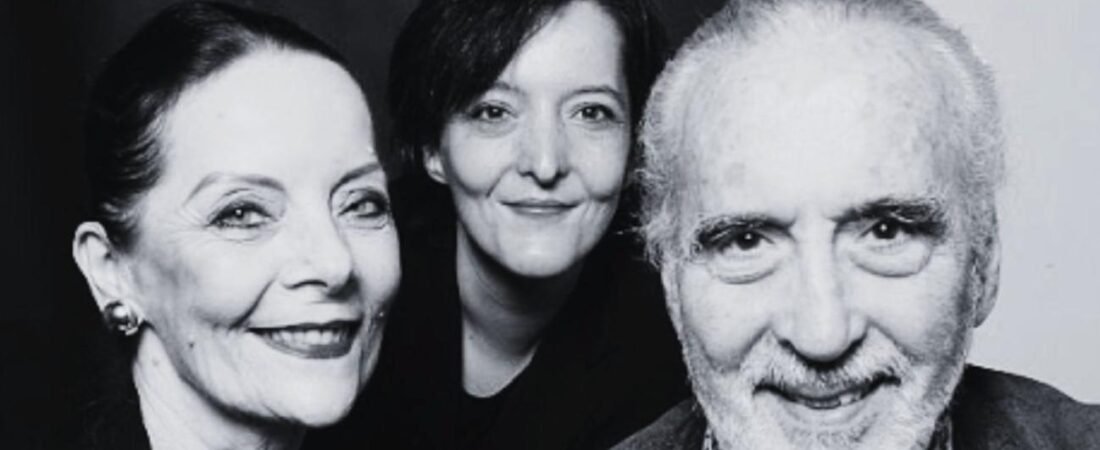
Xandra Carandini Lee remains one of history’s more understated aristocratic figures—a woman whose life was intricately woven into the fabric of 20th-century British nobility and European heritage, yet whose story has largely remained in the shadows of her more famous sibling. Born into a lineage tracing back to ancient Italian nobility and the courts of European power, Xandra embodied a quiet elegance that defined an era of discrete aristocratic influence. As the elder sister of Sir Christopher Frank Carandini Lee, one of cinema’s most iconic figures, Xandra’s narrative reveals much about the aristocratic families who shaped British society during the twentieth century, their values, struggles, and the enduring legacy of heritage and tradition.
Beyond her connection to the legendary actor, Xandra was also the mother of Dame Harriet Walter, one of contemporary Britain’s most acclaimed actresses, whose performances in Succession, The Crown, and Ted Lasso have earned her Primetime Emmy nominations and international recognition. This comprehensive profile examines the life, lineage, and lasting impact of Lady Xandra Carandini de Trafford, a woman whose existence epitomized the intersection of Italian nobility, British aristocracy, and the refined sensibilities of a vanishing era.
Xandra Carandini Lee’s Early Life and Aristocratic Heritage
Birth and Family Background
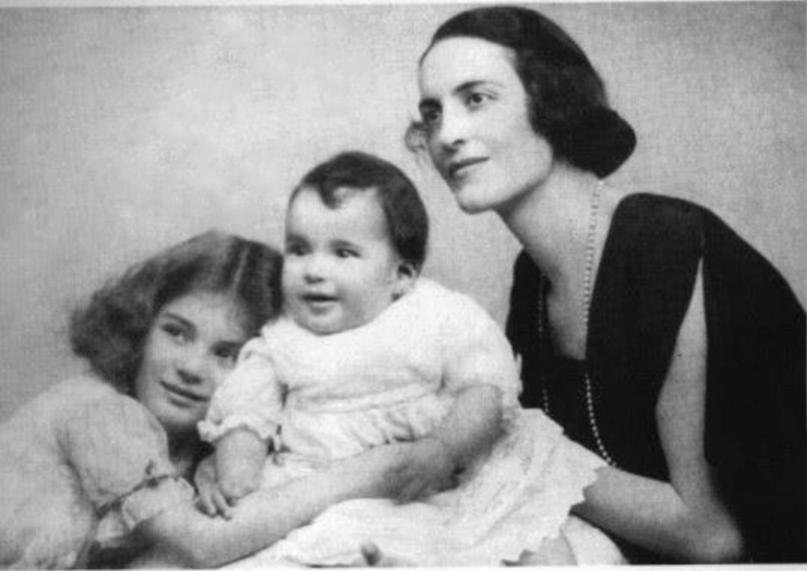
Xandra Carandini Lee was born on July 8, 1917, in Chelsea, London, England, into circumstances of considerable privilege and historical significance. Her father, Lieutenant-Colonel Geoffrey Trollope Lee (1879–1941), served in the 60th King’s Royal Rifle Corps, a distinguished military officer who had seen combat in both the Boer War and the First World War. Her mother, Contessa Estelle Marie Carandini di Sarzano (1889–1981), was an acclaimed Edwardian beauty, a woman of considerable cultural standing whose lineage traced directly to one of Europe’s most ancient and distinguished aristocratic families.
Key Facts About Xandra Carandini Lee
| Biographical Element | Details |
|---|---|
| Full Name | Xandra Carandini Lee |
| Birth Date | July 8, 1917 |
| Birth Place | Chelsea, London, England |
| Death Date | December 12, 2002 |
| Death Place | Kingston Upon Thames, Surrey, England |
| Age at Death | 85 years |
| Father | Lt.-Col. Geoffrey Trollope Lee (1879–1941), King’s Royal Rifle Corps |
| Mother | Contessa Estelle Marie Carandini di Sarzano (1889–1981) |
| Siblings | Sir Christopher Frank Carandini Lee (1922–2015), Nicholas Lee |
| First Marriage | Roderick Walter (December 19, 1946 – October 1996) |
| Daughter | Dame Harriet Mary Walter DBE (b. 1950), acclaimed actress |
| Second Marriage | Sir Dermot Humphrey de Trafford, 6th Baronet (December 22, 1973 – January 22, 2010) |
| Great-Grandmother | Marie Carandini (1826–1894), pioneering opera singer |
| Cousin | Count Nicolò Carandini (1896–1972), Italian Ambassador to Britain (1944–1947) |
| Family Heritage | House of Carandini—ancient Italian nobility (1st century A.D. onwards; royal coat of arms granted by Frederick Barbarossa; Charlemagne connection) |
The household into which Xandra was born represented the zenith of pre-war British aristocratic life—a milieu inhabited by nobility, diplomats, and cultural figures of international repute. Her mother was painted by the distinguished artist Sir John Lavery, as well as by Oswald Birley and Olive Snell, and sculpted by Clare Sheridan, the cousin of Winston Churchill. These artistic tributes to her mother’s beauty were not mere vanities but recorded testimony to a woman of considerable social standing and aesthetic significance.
The Carandini Family: An Ancient Legacy of European Nobility
Origins and Historical Prominence
To understand Xandra Carandini Lee is to comprehend the extraordinary legacy of the House of Carandini, an ancient Italian noble family known since the 12th century. The family’s documented history extends across more than eight centuries of European political, ecclesiastical, and cultural influence—a lineage of remarkable consistency and power.
In the 12th century, Emperor Frederick Barbarossa granted the Carandini family the right to bear the coat of arms of the Holy Roman Empire—a privilege bestowed upon only the most distinguished noble houses. By the 15th century, the Carandinis had risen to political prominence in Modena, and following the Battle of Lepanto (1571), a family member obtained the title of Conte Palatine (Count Palatine). Subsequently, the family acquired the additional title of Marchese (Marquis) of Sarzano—a distinction that would define the family’s standing for centuries to come.
Ancient Lineage and Charlemagne Connection
The Carandini family’s historical significance extends even further into antiquity than commonly recognized. The family traces its origins to the first century A.D., making it one of Europe’s oldest documented noble houses. In an archaeological discovery that underscores the family’s Roman origins, a vase bearing the inscription “Carandus” was unearthed during Roman excavations, dating to the first century—suggesting the family’s prominence in the Roman Empire itself.
The grant of the Holy Roman Empire’s coat of arms by Frederick Barbarossa in the 12th century was not arbitrary. Historical tradition holds that the Carandini family was connected to Emperor Charlemagne, and it is believed this ancient connection influenced Barbarossa’s decision to bestow this extraordinary privilege. This Charlemagne connection would become particularly significant when Christopher Lee, Xandra’s brother, would later famously claim direct descent from Charlemagne through the Carandini lineage, tracing his ancestry back 21 generations to the 8th-century Holy Roman Emperor. As Christopher Lee himself expressed in an interview, claiming ancestry to Charlemagne: “I believe that one in three Europeans are descended from Charlemagne. I am however a direct blood descendent.” This distinction reflects the documented genealogical records maintained by the Carandini family across centuries.
| Carandini Family Distinction | Details |
|---|---|
| Ancient Origins | Traces ancestry to first century A.D. – “Carandus” vase discovered in Roman excavations |
| Founding Recognition | Granted coat of arms of Holy Roman Empire by Emperor Frederick Barbarossa (12th century) |
| Charlemagne Connection | Family believed to trace lineage to Emperor Charlemagne (8th century) |
| Political Prominence | Rose to prominence in Modena by 15th century |
| Primary Title | Marchese (Marquis) of Sarzano |
| Secondary Title | Conte Palatine (Count Palatine) – awarded after Battle of Lepanto (1571) |
| Historical Span | Documented records spanning from 1st century A.D. to present |
Great-Grandmother: Marie Carandini, Pioneering Opera Singer
Perhaps the most culturally significant ancestor in Xandra’s lineage was her great-grandmother, Marie Carandini, Marchioness of Sarzano (born Maria Burgess; 1 February 1826 – 13 April 1894), an English-Australian opera singer of considerable distinction.
Maria Burgess was born in Brixton, Surrey, and at the age of 17 married Italian nobleman Jerome Carandini, the Marquis of Sarzano, who was a political refugee. The couple eventually settled in Australia, where Marie achieved extraordinary prominence in colonial cultural life. Marie established a reputation as a concert singer and operatic prima donna, both in Sydney and Melbourne, and was frequently billed as “The Australian Jenny Lind”—a reference to the celebrated Swedish soprano Jenny Lind, suggesting the exceptional calibre of her vocal talent.
Marie has the distinction of having been Australia’s first Adalgisa in Bellini’s opera Norma (1852, Royal Victoria Theatre, Sydney), and she was instrumental in establishing operatic performance as a significant cultural institution in colonial Australia. Her legacy as a pioneering artist would later serve as inspiration for her great-grandson Christopher Lee’s own pursuit of a career in the performing arts—when family resistance to his theatrical ambitions emerged, he pointed to the successful Carandini performers in Australia, which included his great-grandmother Marie Carandini, who had been a successful opera singer.
Parental Separation and Swiss Exile: Formative Years
A Childhood Altered by Marital Dissolution
Xandra’s early life, though born into privilege, was marked by a formative disruption that would characterize much of her generation’s experience. Her parents separated when her brother Christopher was four years old and divorced two years later. The separation occurred during a period when such marital dissolution was regarded as profoundly scandalous within aristocratic circles—a fact that would have carried considerable social consequences for all parties involved.
During this separation, her mother took her and her brother to Wengen in Switzerland, a region celebrated for its Alpine beauty and favored by European aristocrats seeking respite from social scrutiny. The choice of Switzerland was not accidental; it represented both geographical and social distance from London society, where the family’s marital dissolution might otherwise have provoked considerable gossip and social ostracism.
After two years spent in Switzerland, the children returned to England, where their mother married Harcourt George-St-Croix Rose, a banker and uncle of Ian Fleming, and the family moved to Fulham. This sequence of relocations and remarriage typified the experience of aristocratic children during the interwar period—a time of considerable social flux and changing family structures among Britain’s elite.
Xandra Carandini Lee’s Marriage and Personal Life
First Marriage: The Walter Years
Xandra married Roderick Walter on December 19, 1946, in Westminster, London. Through this union, she assumed the surname Walter, transitioning from Xandra Carandini Lee to Xandra Walter. At the time of marriage, Xandra was 28 years old, while Roderick was born in 1911.

This marriage endured for approximately fifty years. Roderick Walter died in October 1996 in Kensington and Chelsea, London, marking the end of a partnership that had spanned nearly five decades—a testament to the stability and longevity that characterized mid-twentieth-century aristocratic unions. Together, Roderick and Xandra had a daughter who would go on to achieve remarkable prominence in her own right.
Second Marriage: Lady de Trafford
On December 22, 1973, Xandra married Sir Dermot Humphrey de Trafford, 6th Baronet, VRD, FRSA. At age 56, Xandra assumed the title and identity of Lady de Trafford through this union with one of Britain’s most distinguished banker-aristocrats.
| Sir Dermot de Trafford, 6th Baronet | Key Information |
|---|---|
| Birth | January 19, 1925 |
| Death | January 22, 2010 |
| Profession | British banker, businessman, and baronet |
| Military Service | Royal Navy service in WWII (Egypt, Turkey, Greece) |
| Education | Harrow School; School of Oriental and African Studies, University of London (Turkish studies) |
| Honors | VRD (Volunteer Reserve Decoration), FRSA (Fellow of the Royal Society of Arts) |
| Previous Marriage | Patricia Mary Beeley (divorced 1973) |
| Marriage to Xandra | December 22, 1973 |
Sir Dermot was the son of Sir Rudolph de Trafford, 5th Baronet, and possessed a distinguished military record, having served in the Royal Navy during the Second World War in Egypt, Turkey, and Greece. He graduated from the School of Oriental and African Studies with expertise in Turkish studies, reflecting the cosmopolitan educational standards of the British aristocracy during the mid-twentieth century.
Xandra Carandini Lee’s Legacy: Dame Harriet Walter
The Celebrated Actress and Mother’s Enduring Influence
While Xandra maintained a decidedly private existence throughout her life, her daughter would ascend to become one of the most acclaimed actresses of her generation. Dame Harriet Mary Walter DBE was born on September 24, 1950, in Hampstead, London, the daughter of Xandra and Roderick Walter.
Harriet was appointed Dame Commander of the Order of the British Empire (DBE) in 2011 for services to drama, joining an elite cohort of Britain’s most distinguished performers. Her career has spanned more than five decades, beginning in 1974, and has encompassed both theatrical and cinematic achievement of extraordinary breadth and acclaim.
Theatrical Acclaim and International Recognition
Harriet received the Laurence Olivier Award for Best Actress in a Revival in 1989 for her roles in Twelfth Night, A Question of, and Three Sisters with the Royal Shakespeare Company. She has since achieved international prominence through her work in prestigious productions, including a Tony Award nomination for her role as Elizabeth I in the Broadway revival of Mary Stuart.
Contemporary Television Success
In recent years, Harriet has achieved international prominence through her roles in acclaimed television productions. She has earned Primetime Emmy Award nominations for her roles as Lady Caroline Collingwood in Succession (2018–2023) and as Deborah Welton in Ted Lasso (2020–2023). Additionally, she portrayed Clementine Churchill in the Netflix series The Crown, appearing alongside the monarchy’s dramatic narratives.
Her extensive filmography includes roles in Sense and Sensibility (1995), Atonement (2007), The Young Victoria (2009), and The Last Duel (2021)*, alongside appearances in prestige television including Downton Abbey, Killing Eve, and Silo.
Family Connections and Broader Heritage
On her father’s side, Harriet is a great-great-great-granddaughter of John Walter, the founder of The Times newspaper, placing her within one of Britain’s most influential media dynasties. She is the niece of Sir Christopher Lee, connecting her directly to the legendary actor through her mother’s side. Thus, through both parents, Harriet embodies the convergence of aristocratic, cultural, and journalistic achievement that characterized 20th and 21st-century British society.
Family Connections: The Carandini Diplomat
Nicolò Carandini—Ambassador and Influential Figure
Xandra’s family connections extended into the highest echelons of international diplomacy through her cousin, Count Nicolò Carandini (December 6, 1896 – March 18, 1972). Nicolò was the first Italian ambassador to Britain after World War II, serving from 1944–1947, and served as the first president of Alitalia from its foundation in 1948 until his retirement in 1968.
Nicolò’s diplomatic influence proved crucial during Italy’s post-war rehabilitation in British eyes. From 1944 to 1947, he held the position of ambassador in London and participated in his nation’s delegation at the Paris Petite Conference, where he was pivotal in discussions with Austria regarding the status of Italy’s northernmost province, Alto Adige, also known as South Tyrol. This diplomatic achievement represented one of the most significant post-war negotiations in European affairs.
Notably, it was during lunch with his cousin Nicolò Carandini, now the Italian Ambassador to Britain, that Christopher Lee was encouraged to pursue acting, when Carandini remarked, “Why don’t you become an actor, Christopher?”—a casual suggestion that would ultimately transform cinema history.
Connection to Sir Christopher Lee: Sister of a Legend
The Actor Who Revolutionized Horror Cinema
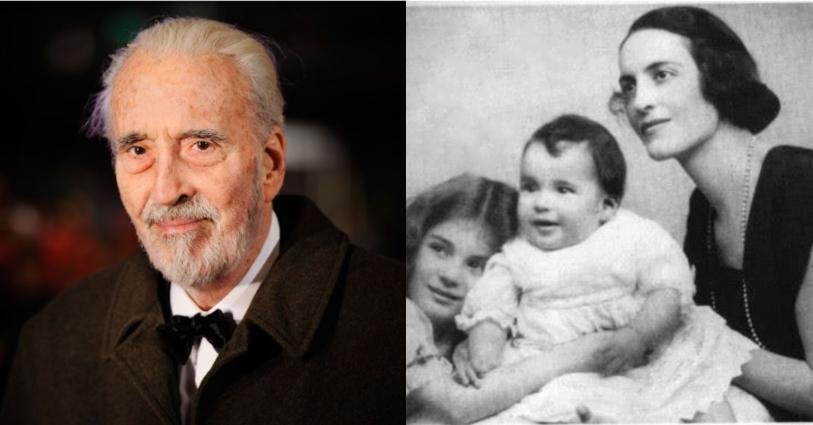
While Xandra’s own life remained largely private and removed from public scrutiny, her younger brother ascended to become one of the most iconic figures in twentieth-century cinema. Sir Christopher Frank Carandini Lee (27 May 1922 – 7 June 2015) was an English actor and singer who, in a career spanning more than sixty years, became known as an actor with tremendous screen presence and a deep and commanding voice who often portrayed villains in horror and franchise films.
Christopher Lee was knighted for services to drama and charity in June 2009 by King Charles III (when Charles was the Prince of Wales), received the BAFTA Fellowship in 2011 and received the BFI Fellowship in 2013. His roles in classics such as The Curse of Frankenstein (1957), Dracula (1958), The Wicker Man (1973), Jinnah (1998), and The Lord of the Rings trilogy secured his status as a cultural icon.
Shared Royal Ancestry: The Charlemagne Connection
Beyond their shared maternal lineage through the Carandini family, Christopher Lee became famous for articulating his connection to Charlemagne. Through their mother’s aristocratic heritage, both Christopher and Xandra shared this ancient royal ancestry. Christopher Lee famously traced his ancestry directly back to Charlemagne, the 8th-century Holy Roman Emperor, through the Carandini lineage. So significant was this connection to Lee that he portrayed Charlemagne himself in the 1994 film “Charlemagne: The Iron King,” making the historical emperor one of his most personal roles.
Public Reunion: This Is Your Life (1974)
Xandra made a rare public appearance during the BBC television program “This Is Your Life” featuring Christopher Lee in 1974, where she appeared as a surprise guest credited as Xandra Carandini de Trafford, playing the role of Christopher’s sister. This appearance represented one of her few documented public acknowledgments, demonstrating the deep familial bonds that persisted despite their divergent life paths. While Christopher pursued a career of international acclaim, Xandra maintained the private role of family matriarch, raising her distinguished daughter and preserving the family’s heritage.
Xandra Carandini Lee’s Life Legacy and Final Years
A Discrete Aristocratic Presence
Unlike her celebrated brother, Xandra Carandini Lee chose—or was perhaps naturally inclined toward—a private existence. Her life was characterized not by public achievement or recognition, but by the maintenance of aristocratic standing, the cultivation of family relationships, and the preservation of her distinguished heritage. Xandra passed away on December 12, 2002, at Kingston Upon Thames, Surrey, at the age of 85.Her death marked the end of an era—a life that had spanned from the final years of Edwardian aristocratic dominance through the transformative decades of the twentieth century. She had witnessed the rise of her brother to international prominence, the post-war reorganization of European society, the establishment of new democratic institutions in Italy through her cousin Nicolò’s diplomatic efforts, the emergence of her daughter as one of Britain’s most celebrated actresses, and the gradual transformation of aristocratic privilege in modern Britain.
Conclusion: The Quiet Significance of Aristocratic Legacy
Xandra Carandini Lee’s life, though largely unmarked by the public accolades and recognition that befell her brother or achieved by her daughter, represents an important dimension of twentieth-century aristocratic history. She was the living embodiment of ancient European nobility, the keeper of family heritage, and the quiet presence behind some of the era’s most significant historical figures. Her lineage—connecting directly to Roman antiquity, to the legendary Charlemagne, to an Italian marquis, an opera singer of international repute, a papal secretary, and post-war diplomatic architects—represents the intricate networks of European aristocracy that, though diminished, continued to shape society throughout the twentieth century.
As the elder sister of Christopher Lee and mother of Dame Harriet Walter, Xandra occupied a unique position—neither seeking the spotlight herself, yet inescapably connected to two of her era’s most commanding cultural presences. Her discretion, her maintenance of aristocratic values, and her preservation of family heritage stand as testimony to a vanishing world of European nobility, where significance was often measured not by public achievement, but by the integrity of lineage and the continuity of tradition.
The story of Xandra Carandini Lee is ultimately the story of aristocratic Europe in transition—a narrative of heritage, adaptation, and the enduring power of family connection across generations and continents. In an age when celebrity and public recognition define significance, her quiet legacy reminds us that some of the most important figures in history are those who preserve, nurture, and pass forward the achievements and values of their ancestors.
You May Explore These Profiles-
Katy Humpage: Inside the Private World of Oliver Phelps’ Wife
Ann Donoghue: The Life, Career, and Enduring Legacy of Tommy Steele’s Wife
Tom Cates: The B2B Visionary Behind SalesEquity and Encompass-CX – A Complete Biography
